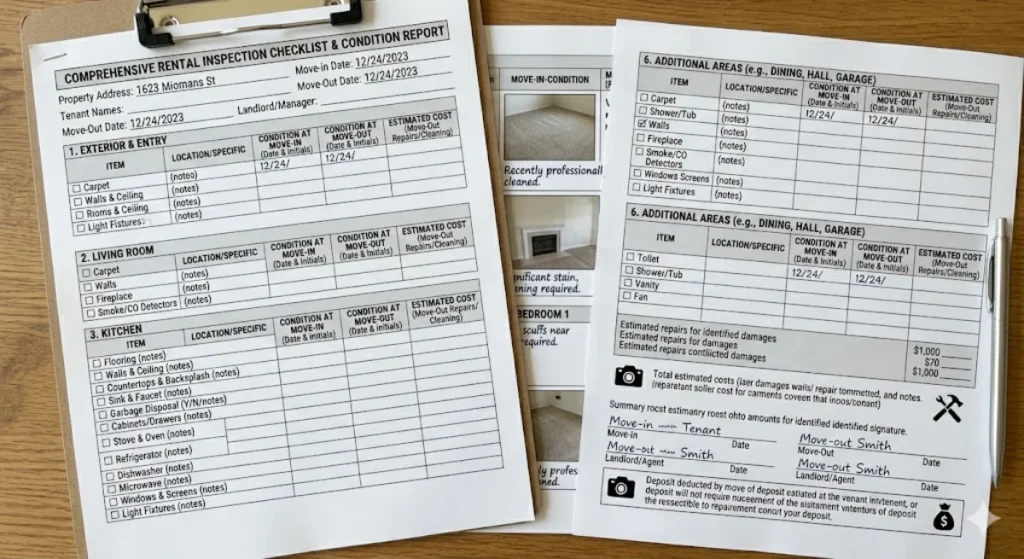
A rental inspection checklist is a structured document landlords and property managers use to record the condition of a rental property during move-in, periodic walkthroughs, and move-out. A consistent checklist with time-stamped photos helps support security deposit decisions and catches maintenance issues before they become costly.
This guide gives you the complete rental property inspection checklist, organized by inspection type and broken down room by room. It covers what to document, what landlords most commonly miss, and how to build a documentation system that protects you, your owners, and your business.

In This Guide
Why Rental Inspection Checklists Matter
Most property managers know inspections are important. However, having a standardized rental inspection checklist that is consistently used for every inspection helps protect your business, your owners, and your residents.
Whether you’re completing a move-in, periodic, or move-out inspection, documenting the property’s condition with detailed notes, photos, and inspection reports creates a reliable record that supports maintenance planning, lease compliance, and dispute resolution.
- Security deposit disputes: Before-and-after documentation can help support damage claims and distinguish tenant-caused damage from ordinary wear.
- Maintenance cost surprises: Routine inspections can identify leaks, HVAC issues, roof damage, and electrical concerns before they become larger repairs.
- Owner trust and liability: A documented inspection process demonstrates that the property is being monitored consistently.
- Documentation: Detailed inspection reports, photos, and signed condition records create a clearer history of the property.
Get a ready-to-use move-in inspection checklist to help your team document property condition consistently, capture the right details, and create a stronger inspection record from day one.
Download the Free ChecklistTypes of Rental Property Inspections
A complete rental inspection program typically includes move-in, periodic, and move-out inspections. Each serves a different purpose during the tenancy and creates documentation that can be compared throughout the life of the lease.
| Inspection Type | Timing | Purpose |
|---|---|---|
| Move-In | Before occupancy | Establishes the property’s baseline condition. |
| Periodic | During tenancy | Identifies maintenance and property-condition issues. |
| Move-Out | After vacancy | Compares the property against its move-in condition. |
Many property managers use virtual property inspection services to reduce drive time and scheduling friction while maintaining consistent documentation. Learn more about virtual inspection software or view pricing.
The Complete Move-In Rental Inspection Checklist
A move-in inspection establishes the property’s condition before a tenant takes possession. Document each area using clear photos and written condition notes so future inspections can be compared against a reliable baseline.
Exterior
- Roof condition: Missing shingles, damaged flashing, or visible sagging.
- Gutters and downspouts: Properly attached and directing water away.
- Foundation: Cracks, settling, or moisture intrusion.
- Siding and walls: Damage, cracks, loose panels, or peeling paint.
- Windows: Glass, locks, screens, weather stripping, and frames.
- Driveways and walkways: Cracks, drainage issues, and trip hazards.
- Exterior lighting: Confirm fixtures are operational.
- Landscaping and fencing: Document overall condition.
- Garage door: Test operation and safety reverse function.
Entry and Common Areas
- Front door: Locks, deadbolt, weather stripping, and condition.
- Keys issued: Document keys, remotes, and access cards.
- Interior doors: Check operation and damage.
- Flooring: Scratches, stains, chips, or loose materials.
- Walls and ceilings: Holes, stains, dents, or water damage.
- Lighting: Test fixtures and switches.
- Safety detectors: Test smoke and carbon monoxide detectors.
Kitchen
- Cabinets and drawers: Doors, hinges, interiors, and cleanliness.
- Countertops: Burns, chips, cracks, or stains.
- Sink and faucet: Water flow, drainage, and leaks.
- Garbage disposal: Test operation if applicable.
- Appliances: Refrigerator, dishwasher, range, oven, and microwave.
- Range hood: Test ventilation.
- Electrical outlets: Test applicable GFCI outlets.
Living Areas & Bathrooms
- Living areas: Walls, flooring, windows, blinds, outlets, and fans.
- Water damage: Look for staining, moisture, or visible mold.
- Toilets: Test flushing and inspect for leaks.
- Showers and tubs: Check caulking, drainage, and condition.
- Bathroom exhaust: Confirm the fan operates.
Periodic Rental Inspection Checklist
Periodic rental inspections help property managers monitor property condition throughout the lease term and identify preventive maintenance or lease-compliance concerns. If your team is short on time, Resident Inspect offers professional rental property inspections that handle the walkthrough for you.
Landlord-entry notice requirements vary by jurisdiction. Always verify applicable state and local law and your lease requirements before entering an occupied rental property.
What to Check During a Periodic Inspection
- Exterior: Roof, gutters, siding, walkways, landscaping, and drainage.
- Interior: Walls, ceilings, flooring, windows, doors, moisture, and mold.
- Kitchen and bathrooms: Faucets, plumbing, appliances, GFCI outlets, and caulking.
- HVAC and utilities: Filters, thermostat, vents, water heater, and detectors.
- Lease compliance: Unauthorized occupants, pets, smoking, modifications, or safety hazards.
Download the free Move-In Inspection Checklist and give your team a consistent framework for documenting each rental before a resident takes possession.
Get the Move-In ChecklistMove-Out Rental Inspection Checklist
Document the property’s condition after the tenant vacates and before turnover work alters its condition whenever appropriate under your process and applicable law. Resident Inspect can help your team run move-in and move-out inspections so each report is easy to compare.
Capture the property’s as-vacated condition before cleaning or repairs whenever possible so the move-out report can be compared accurately with prior documentation.
Examples of Potential Tenant-Caused Damage
What Property Managers Most Commonly Miss
Frequently Asked Questions
What should a rental inspection checklist include?
A rental inspection checklist should cover the exterior, living areas, kitchen, bathrooms, bedrooms, appliances, HVAC, plumbing, electrical components, safety devices, and property condition.
How often should a landlord inspect a rental property?
Inspection frequency depends on applicable law, lease provisions, property requirements, and company policy. Many property managers conduct periodic inspections during the tenancy.
What is the difference between move-in and move-out inspections?
The move-in inspection establishes the property’s baseline condition. The move-out inspection documents its condition after vacancy so changes can be compared against that baseline.
Should rental inspections include photos?
Yes. Clear photographs make inspection documentation more useful by creating a visual record of property condition.
Can rental inspections be performed virtually?
Yes. Virtual inspection workflows can help property managers document property condition remotely while reducing travel and scheduling requirements.
Get Your Free Move-In Inspection Checklist
Complete the form below to get the Move-In Inspection Checklist and start building a more consistent property inspection process.