
Property Management Outsourcing:
What It Is & When It Works
As portfolios grow, many property owners start thinking about outsourcing. The goal is simple: reduce workload, control costs, and run operations more smoothly. But outsourcing is not the right answer for every situation — and the tasks you choose to outsource determine whether it works.


What Is Property Management Outsourcing?
Property management outsourcing means hiring a third party to handle specific tasks instead of doing everything in-house. Rather than building large internal teams, property management companies assign work to vendors who specialize in those functions.
Some companies outsource only one task. Others rely on outsourced property management services for several parts of their business. The scope depends on portfolio size, growth stage, and internal staff capacity.
- Property inspections across single and multi-market portfolios
- Leasing support and showing coordination
- Accounting, bookkeeping, and owner reporting
- Maintenance coordination and vendor scheduling
- Call centers and after-hours tenant communication
- Administrative tasks and data entry
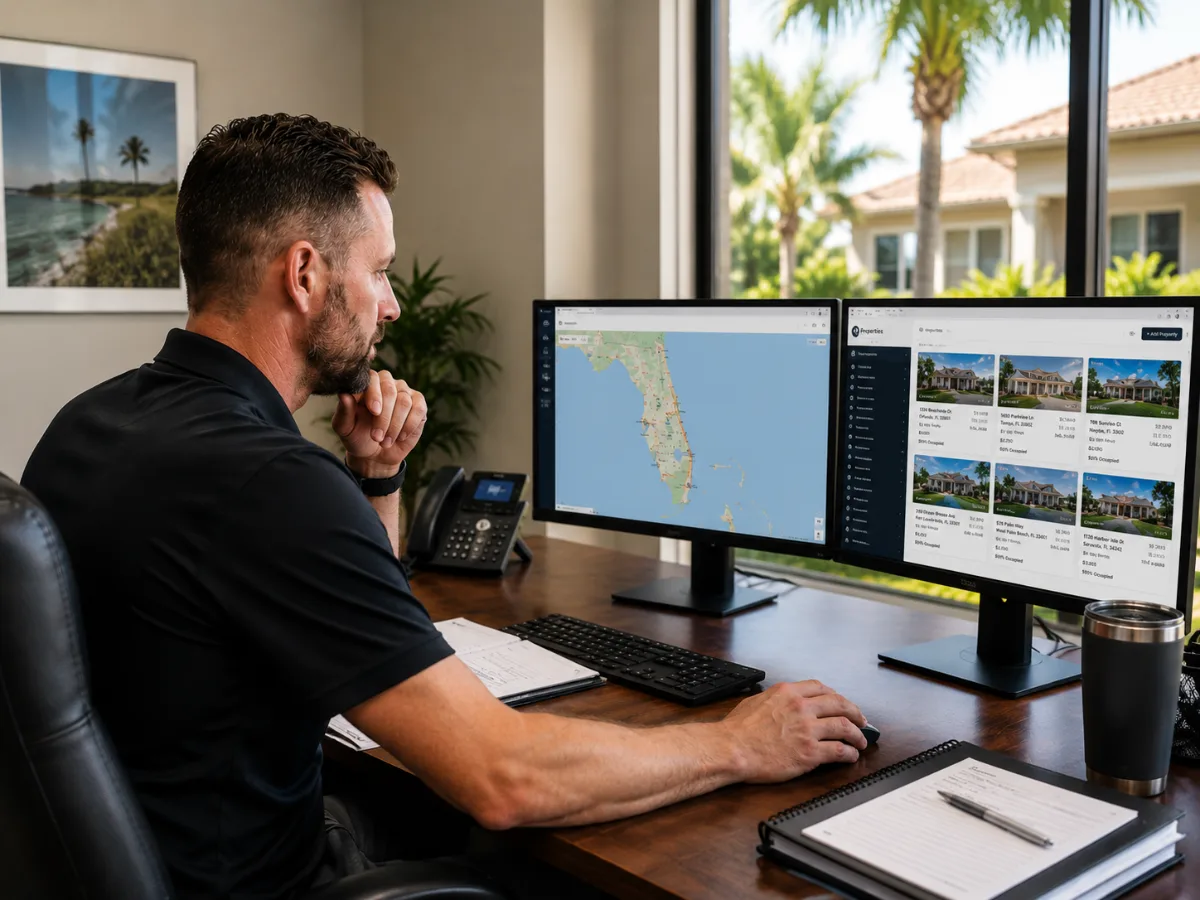
Why Property Managers Consider Outsourcing
There are several common reasons property managers look at outsourcing. Here are the four primary drivers.
Reduced Workload
Outsourcing removes day-to-day tasks from internal teams. Staff can focus on growth, owner relationships, and long-term planning instead of repetitive processes.
Lower Staffing Costs
Hiring full-time employees takes time and money. Outsourcing turns fixed labor costs into flexible expenses — a real advantage for growing portfolios.
Easier Scaling
As portfolios grow, outsourcing makes it easier to handle more properties without immediately adding headcount. Vendors absorb volume faster than internal hiring allows.
Established Processes
Third-party providers often already have systems and workflows that would take years to build internally. You get that infrastructure from day one.
Commonly Outsourced Property Management Tasks
Not every task needs to stay in-house. Some functions are easier to outsource than others — especially those that are repeatable, process-driven, and do not require direct owner relationships.
Property Inspections
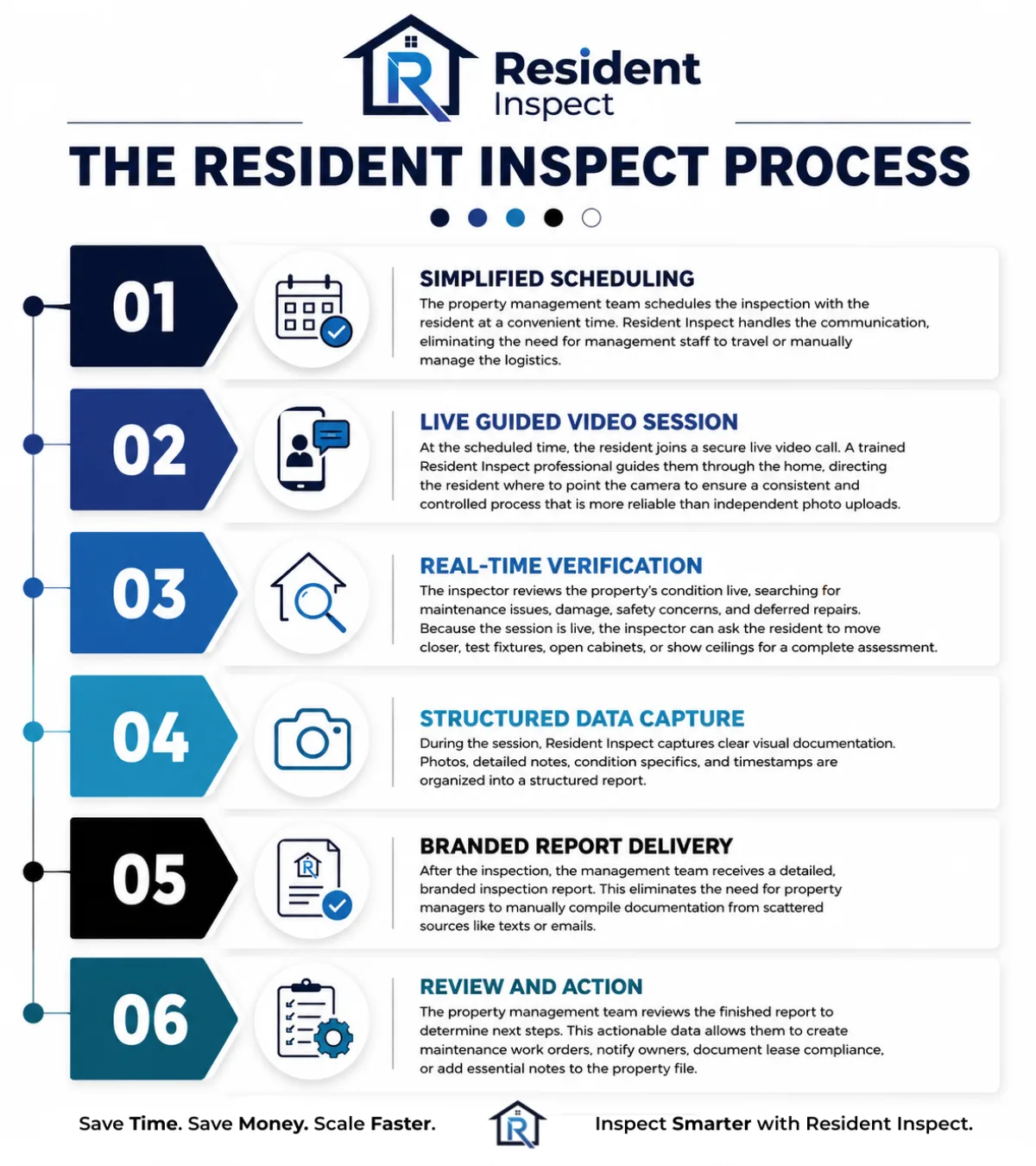
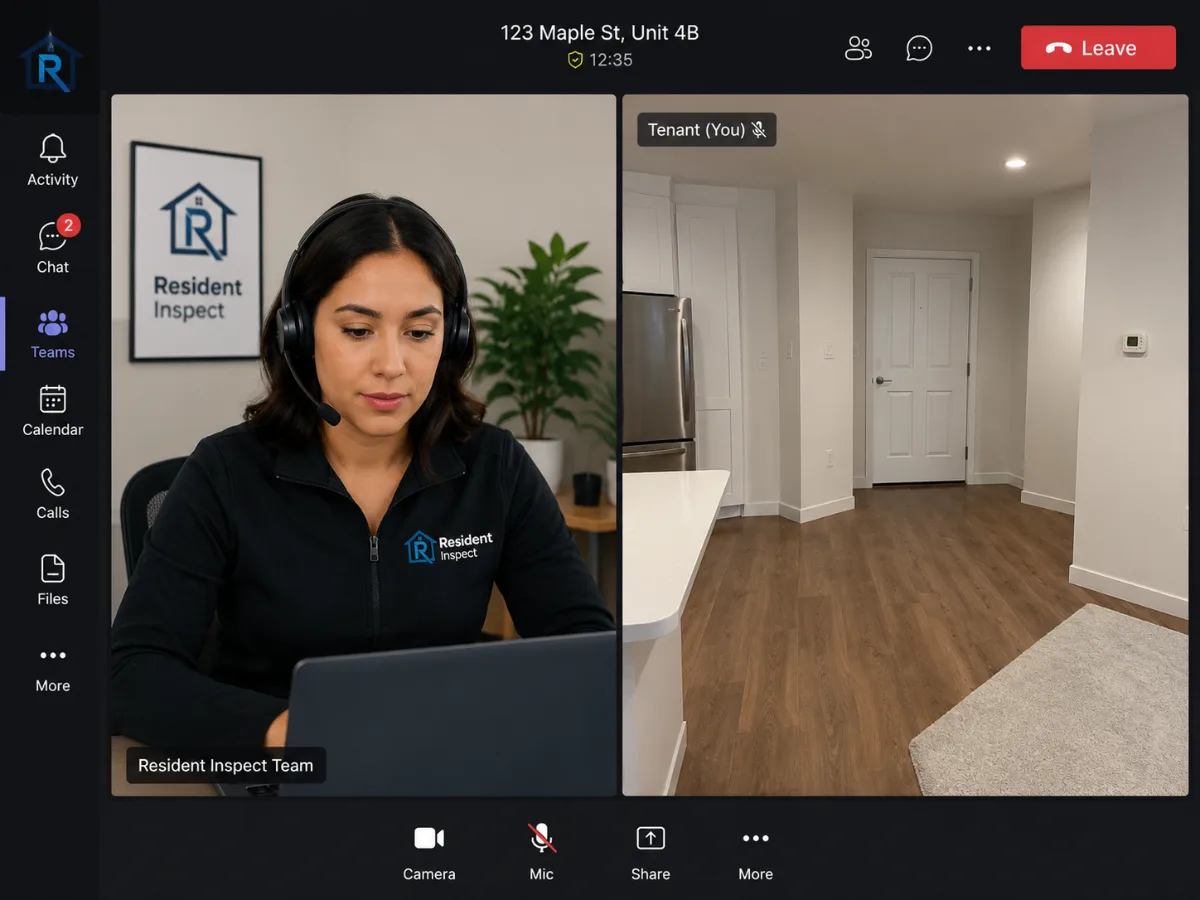
Many companies outsource inspections to reduce travel time and staffing pressure across multiple markets. Virtual inspection platforms handle scheduling, walkthroughs, and white-labeled reports without your team leaving the office.
Accounting & Reporting
Owner statements, bookkeeping, and reconciliations are often outsourced for accuracy and consistency — especially in single-family portfolios where volume outpaces in-house capacity.
Maintenance Coordination
Some managers outsource maintenance calls, vendor scheduling, and follow-ups — particularly when paired with a work order tracking platform that keeps everything documented.
Leasing Support
Administrative leasing tasks and showing coordination are commonly outsourced for firms managing high vacancy volume across multiple markets.
The Risks of Outsourced Property Management Services
Outsourcing can help — but it comes with real risks that can damage owner relationships and operational consistency if not managed carefully.
Common Risks
- Loss of quality control and oversight
- Inconsistent standards across vendors
- Limited documentation and reporting
- Vendor dependency and pricing risk
- Gaps in owner communication
How to Mitigate
- Set clear performance benchmarks upfront
- Use vendors with documented, repeatable processes
- Require detailed reports for every task completed
- Maintain multiple vendor relationships
- Keep owner communication in-house at all times
What to Outsource vs. What to Keep In-House
A common mistake is outsourcing too much, too fast. Some tasks work well outside your organization. Others should stay internal — especially anything tied to trust, judgment, or owner relationships.
Good to Outsource
- Routine property inspections
- Administrative leasing work
- Maintenance call handling
- After-hours tenant communication
- Data entry, reporting, and reconciliations
Keep In-House
- Owner communication and relationships
- Financial decisions and portfolio strategy
- Final vendor approvals and disputes
- Long-term lease decisions
- Owner reporting narrative and context

The Role of Technology in Modern Outsourcing
Today, outsourcing does not always mean hiring more people. Many property managers now outsource through systems instead of staffing.
Standardized Processes
Technology-driven outsourcing enforces consistent workflows every time — no variation based on which vendor or staff member handles the task.
Full Visibility
Every task is documented and trackable. You see exactly what was done, when, and by whom — without chasing vendors for status updates.
Scale Without Headcount
System-based outsourcing grows with your portfolio. Add 50 doors without adding staff — the platform handles the volume consistently.
Lower Long-Term Cost
Reduce per-unit cost over time as processes become more efficient. No staffing turnover, no retraining, no pricing surprises from vendor changes.
Traditional Outsourcing vs. System-Based Outsourcing
Traditional outsourcing depends on people. System-based outsourcing depends on repeatable processes — producing more consistent, defensible results at lower long-term cost.
Outsource Inspections the System-Based Way
Resident Inspect is the system-based alternative to in-house and third-party inspections. Live virtual walkthroughs by a trained team — white-labeled reports, tenant scheduling included, delivered within one business day. All 50 states.
A Simple Way to Start With Property Management Outsourcing
If you are new to outsourcing, you do not need to outsource everything at once. Start small — choose one task that takes up significant time but does not require daily judgment or owner-facing decisions.
Good starting points for most property management firms:
- Property inspections — especially across multiple markets where travel is the bottleneck
- Administrative leasing tasks — showing coordination, application processing
- Maintenance call handling — after-hours and overflow volume
- Reporting and documentation — owner statements, reconciliations
- After-hours tenant communication — reducing on-call burden on your team
Starting small gives you proof of concept without operational risk. Most firms that successfully outsource started with one function, measured the result, then expanded.
Property Management Industry Resources
Authoritative sources for property management standards, labor data, and industry benchmarks referenced by professionals nationwide.
Property Management Outsourcing FAQs
Eight questions property managers ask most often before making outsourcing decisions.
What is property management outsourcing?
+It means hiring third parties to handle specific property management tasks instead of managing everything in-house. Common examples include property inspections, maintenance coordination, administrative leasing work, and after-hours tenant communication.
What tasks are commonly outsourced in property management?
+Inspections, maintenance coordination, administrative leasing work, and call handling are most common. Accounting and bookkeeping are also frequently handled by third-party providers or virtual assistants — particularly as portfolio volume outpaces in-house capacity.
What are the risks of outsourcing property management?
+Loss of quality control, inconsistent standards across vendors, and limited visibility into vendor performance are the primary risks. Vendor dependency is also a concern if a provider changes pricing or service levels. The solution is to select vendors with documented processes and require detailed reporting for every completed task.
Is outsourcing always the best option for property managers?
+No. Many companies get the best results by combining selective outsourcing with strong internal systems. Outsourcing works best for repeatable, process-driven tasks — not decisions that require judgment, owner context, or direct relationship management.
What is a better alternative to full outsourcing?
+System-based outsourcing using standardized software and trained vendor teams instead of staffing-heavy generalist vendors. Virtual inspection platforms, maintenance tracking tools, and automated reporting software let you scale without giving up control or data ownership.
How much does outsourced property management typically cost?
+Costs vary significantly by task and provider. In-person inspection services typically run $75–$125 or more per visit when you factor in travel, labor, and scheduling overhead. Virtual inspection services like Resident Inspect can reduce that cost by up to 60% while improving documentation quality and consistency.
What should I look for in an outsourced inspection provider?
+Look for documented inspection protocols, white-labeled reporting under your brand, consistent inspector training, direct tenant scheduling support, and photo documentation controlled by the inspector — not the tenant. See how Resident Inspect approaches inspections for a benchmark.
When does outsourcing property management make the most sense?
+Outsourcing works best when managing properties across multiple markets, scaling faster than you can hire, handling high-volume repeatable tasks, or replacing in-house inspection workflows that consume staff time without producing defensible documentation.
Trusted by Property Managers Nationwide
Real reviews from property management companies, landlords, and rental operators who use Resident Inspect across their portfolios.
Outsourcing That Runs Itself
The best outsourcing arrangements do not require your team to manage them. Resident Inspect is built with automation at every step — so inspections move from request to delivered report without manual follow-up.
Automated Tenant Outreach
Once you submit the inspection request, we contact your tenant automatically — no manual scheduling, no back-and-forth on your end.
Multi-Touch Reminder Sequences
Email, text, and phone reminders go out automatically in the days leading up to the inspection — reducing no-shows without any action from your team.
Compliance Addendum Enforcement
Tenants who signed the Periodic Inspection Lease Addendum receive automated notice of their legal obligation to participate — with financial consequences for refusal built in.
Automatic Report Delivery
Your branded inspection report is delivered to your inbox — or uploaded to your shared drive — automatically within one business day of the completed inspection.
PM Software Integration
Inspection requests come in from your property management software. Completed reports go back out — without any manual transfer, duplicate entry, or file management on your end.
Bulk Inspection Scheduling
Submit your entire monthly inspection list in one batch. We process and schedule every property automatically — scaling to any volume without adding complexity for your team.
Guides for Property Managers Who Want to Outsource Smarter
The Resident Inspect blog covers the operational challenges property managers actually face — inspection workflows, tenant compliance, documentation standards, and outsourcing strategy.
Ready to Outsource Inspections the Smart Way?
Resident Inspect replaces in-person inspections with live virtual walkthroughs — white-labeled reports, trained team, guaranteed turnaround, up to 60% in savings. All 50 states.