
How to Save Money with Expert Inspection Reporting


Aaron Cooper
Founder & Chief Executive Officer, Resident Inspect
📍 Jacksonville, FL
Aaron Cooper is a seasoned property technology entrepreneur and inspection industry expert. As the Founder and CEO of Resident Inspect, he leads the development of intelligent inspection platforms that empower landlords, property managers, and investors to streamline digital inspections and ensure compliance.
Table of Contents
- Introduction
- The Cost of Reactive Maintenance
- Why Inspection Reporting Matters
- How Proactive Inspection Saves Money
- Best Tools for Digital Reporting
- Integrating Reports with Maintenance Systems
- Training Staff for High-Quality Inspections
- Using Reports to Forecast Failures
- Going Mobile: Speed and Accuracy
- Track & Act on KPIs
- Conclusion
- FAQs
Introduction
Maintenance doesn’t have to be a fire drill. Yet, too many businesses rely on fixing what’s broken, rather than preventing breakdowns. The difference between reactive and proactive maintenance? One burns cash. The other saves it.
The secret weapon to cost-effective maintenance?
Expert Inspection reporting.
The Cost of Reactive Maintenance
Reactive maintenance leads to:
- Costly emergency service calls
- Equipment downtime and lost productivity
- Increased labor overtime
- Shortened asset lifespan
- Safety violations and penalties
This “fix it when it breaks” approach quickly balloons your operational budget — and it’s entirely preventable.
Why Expert Inspection Reporting Matters
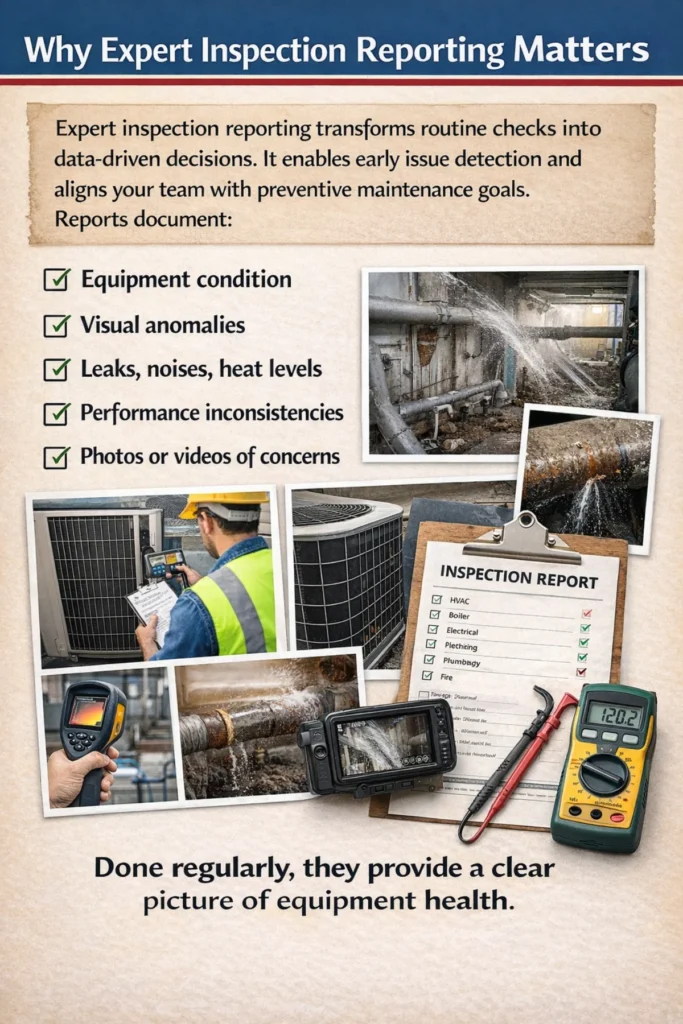
Expert Inspection reporting transforms routine checks into data-driven decisions. It enables early issue detection and aligns your team with preventive maintenance goals. Reports document:
- Equipment condition
- Visual anomalies
- Leaks, noises, heat levels
- Performance inconsistencies
- Photos or videos of concerns
Done regularly, they provide a clear picture of equipment health.
How Proactive Inspection Saves Money
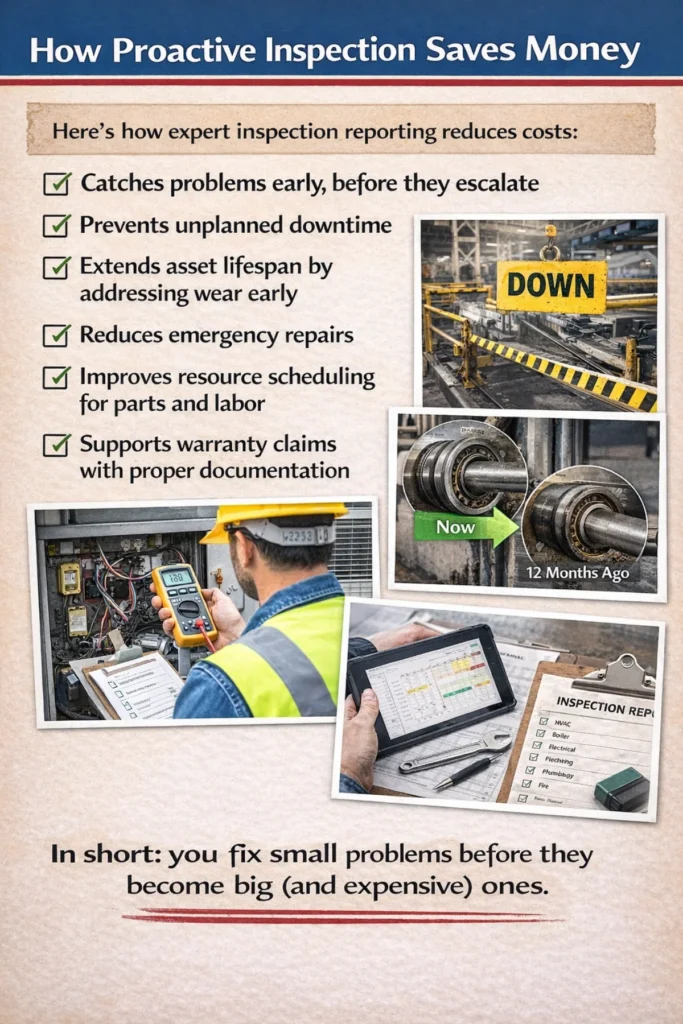
Here’s how expert inspection reporting reduces costs:
- Catches problems early, before they escalate
- Prevents unplanned downtime
- Extends asset lifespan by addressing wear early
- Reduces emergency repairs
- Improves resource scheduling for parts and labor
- Supports warranty claims with proper documentation
In short: you fix small problems before they become big (and expensive) ones.
Best Tools for Digital Reporting That Save Money
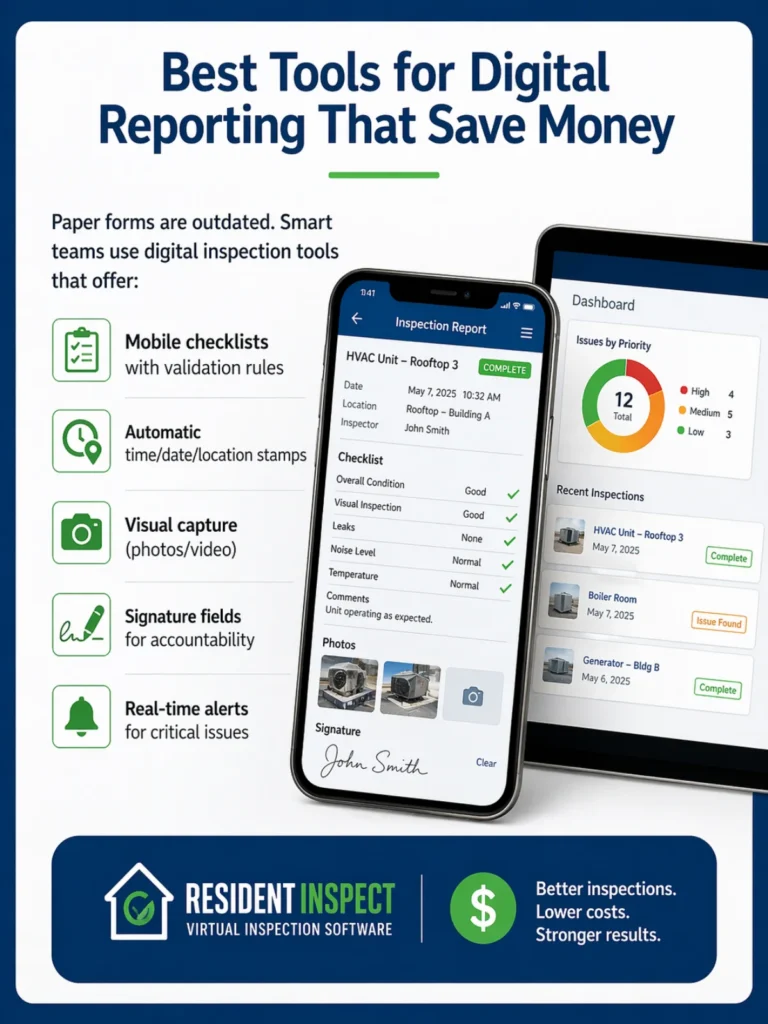
Paper forms are outdated. Smart teams use digital inspection tools that offer:
- Mobile checklists with validation rules
- Automatic time/date/location stamps
- Visual capture (photos/video)
- Signature fields for accountability
- Real-time alerts for critical issues
- Resident Inspect Virtual Inspection Software
Top-rated tools include: UpKeep, MaintainX, Fiix, Flowdit, and Ezo CMMS.
Integrating Reports with Maintenance Systems
When inspection reports feed into your CMMS (Computerized Maintenance Management System), it unlocks:
- Auto-generated work orders
- Trend and failure pattern analysis
- Parts and labor forecasting
- Automated maintenance scheduling
This connected ecosystem leads to leaner operations and lower costs.
Training Staff for High-Quality Inspections Can Save Money

Even the best tools fail without trained eyes. Train your team to:

- Identify failure signs (vibration, overheating, corrosion)
- Use severity rating scales consistently
- Document clearly, without vague language
- Use apps or tools correctly
Standardization is key — your reports must be consistent, objective, and actionable.
Using Reports to Forecast Failures
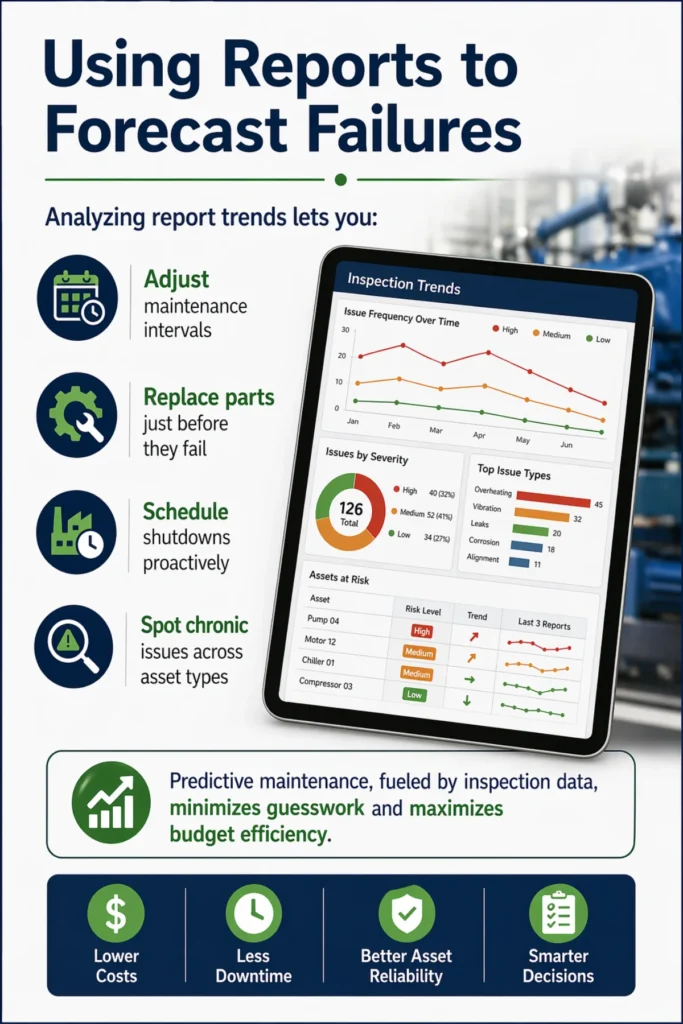
Analyzing report trends lets you:
- Adjust maintenance intervals
- Replace parts just before they fail
- Schedule shutdowns proactively
- Spot chronic issues across asset types
Predictive maintenance, fueled by inspection data, minimizes guesswork and maximizes budget efficiency.
Going Mobile: Speed and Accuracy
Field technicians using mobile reporting tools can:
- Instantly log findings
- Capture media for proof
- Submit reports in real time
- Eliminate transcription errors
Mobile-first expert inspection reporting ensures speed, accuracy, and traceability.
Track & Act on KPIs to Save Money
Measure what matters. Track:
- Mean Time Between Failures (MTBF)
- Average Repair Time (ART)
- First-Time Fix Rate (FTFR)
- Planned vs. Unplanned Maintenance Ratio
- Inspection-to-Work-Order Conversion Rate
Use this data to continuously improve efficiency and cost-saving strategies.
Conclusion
Expert Inspection reporting is the bridge between reactive maintenance chaos and proactive maintenance control.
It saves money by:
- Preventing downtime
- Reducing emergency fixes
- Extending equipment life
- Helping you plan smarter
From clipboard to cloud, from fire-fighting to foresight, the future of cost-effective maintenance starts with inspection reporting.
Frequently Asked Questions (FAQs)
What is the difference between reactive and proactive maintenance?
Reactive fixes problems after they happen. Proactive prevents them through inspections, planning, and early interventions.
How can inspection reporting reduce repair costs?
By catching issues early, you avoid expensive breakdowns and emergency service fees.
Do small businesses benefit from digital inspection tools?
Yes. Even low-cost tools help small teams stay organized, prevent failures, and reduce waste.
How often should inspections be done?
It depends on equipment criticality, but monthly or weekly is a good start. Consistency is more important than frequency.
What’s the ROI on implementing digital inspection reporting?
Studies show 20–40% savings in maintenance-related costs within the first year of adoption.