Aaron Cooper is a property technology entrepreneur and inspection industry expert. As the Founder and CEO of Resident Inspect, he leads the development of digital inspection tools that help landlords, property managers, and real estate investors streamline property documentation, improve operational consistency, and support stronger compliance practices.
💡
Quick Answer
A rental inspection checklist is a structured document landlords and property managers use to record the condition of a rental property during move-in, periodic walkthroughs, and move-out. A consistent checklist with time-stamped photos is the primary defense against security deposit disputes and the main tool for catching maintenance issues before they become costly. Use the same format for every inspection so that before-and-after comparisons are legally defensible.
This guide gives you the complete rental property inspection checklist, organized by inspection type and broken down room by room. It covers what to document, what landlords most commonly miss, and how to build a documentation system that protects you, your owners, and your business.
In This Guide
Why Rental Inspection Checklists Matter More Than You Think
Most property managers know inspections are important. Fewer have a consistent, documented property inspection checklist system that actually gets used on every single inspection. Here is what is at stake when you skip it:
Security deposit disputes. Without before-and-after documentation, you have no evidence of tenant-caused damage. Courts routinely side with tenants when landlords cannot produce inspection reports.
Maintenance cost surprises. Issues caught at month 3 cost a fraction of what they cost at move-out. A periodic inspection checklist lets you spot water intrusion, HVAC neglect, and unauthorized pets before they become expensive problems.
Owner trust and liability. If a property deteriorates under your management and you have no inspection record, you are exposed — both legally and in the owner relationship.
Legal defensibility. Time-stamped, signed inspection reports with photos are significantly more defensible in court and with insurers than verbal accounts or undated photos.
The rental inspection checklist is not just an operational tool. It is a risk management tool. Every box checked is protection banked.
A complete rental inspection program requires three distinct checklist types. Each has a different purpose, different timing, and different legal significance.
Inspection Type
Timing
Purpose
Move-In
Day of key handover, before occupancy
Baseline condition document — foundation of all future damage claims
Periodic
Every 3 to 6 months during tenancy
Lease compliance, maintenance review, and mid-tenancy documentation
Move-Out
Within 24 to 48 hours after vacating
Compared to move-in to determine damage deductions
i
Property Manager Tip
Many property managers now use virtual property inspection services for periodic walkthroughs, eliminating windshield time and scheduling friction while producing the same documentation quality as in-person visits. Resident Inspect handles tenant communication, scheduling, the inspection, and report delivery in one workflow.
The Complete Move-In Rental Inspection Checklist
Document every item below using: photos, written condition notes, and tenant and property manager signatures. Any pre-existing damage should be clearly noted before the tenant takes possession.
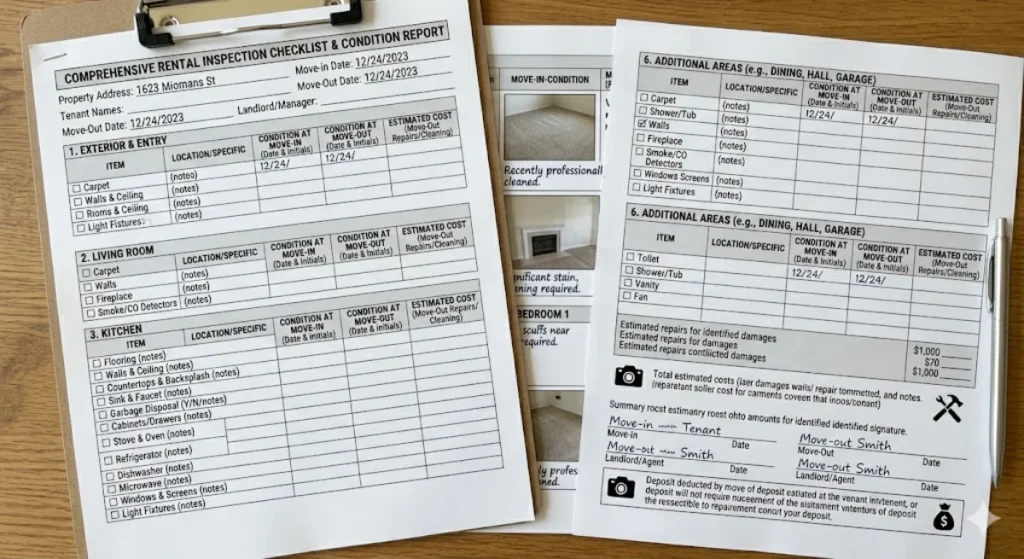
Rental Inspection Checklist
Use this room-by-room checklist to document property condition, maintenance concerns, safety items, and tenant responsibility areas during move-in, periodic, and move-out inspections.
Exterior
Entry and Common Areas
Living Room / Family Room
Kitchen
Bathrooms
Bedrooms
Laundry Area
Mechanical Systems
Periodic Rental Inspection Checklist
The periodic inspection is not a full move-in survey. It is a targeted review for lease compliance, safety, and maintenance. Conduct every 3 to 6 months with proper advance notice as required by your state’s landlord-tenant law.
!
Notice Requirements
Most states require 24 to 48 hours written notice before a non-emergency landlord entry. Always check your state’s statute. Need templates? See our Tenant Inspection Notice guide for letter, email, and text templates.
Periodic Inspection Checklist
Use this checklist during periodic rental inspections to document lease compliance, life safety items, maintenance indicators, and general property condition.
Lease Compliance
Authorized occupants — no signs of additional occupants beyond those on the lease
Unauthorized pets — pet evidence such as food bowls, fur, scratches, or odor
Subletting — no indication of unauthorized subletting or short-term rental use
Lease-prohibited modifications — holes in walls, removed fixtures, or paint without approval
Life Safety
Smoke detectors — test every unit and replace batteries if needed
Carbon monoxide detectors — test every unit where required
Fire extinguisher — charged and accessible where applicable
Exits — no blocked emergency exits
Electrical hazards — no overloaded outlets, daisy-chained power strips, or exposed wiring
Maintenance Indicators
Water intrusion — ceiling stains, wall discoloration, musty odor, or standing water
Mold or mildew — bathroom caulking, under sinks, window sills
Plumbing leaks — under sinks, around toilet bases, under water heater
HVAC filter — document condition and replace if excessively dirty
Pest signs — droppings, entry points, evidence of infestation
Appliances — confirm working condition and visible damage
General Condition
Overall cleanliness and upkeep
Hoarding or clutter that creates a safety hazard or conceals damage
Flooring — new scratches, stains, or damage not present at move-in
Walls — new holes, unauthorized nail patterns, scuffing, or staining
Any visible items requiring repair or follow-up maintenance
Move-Out Rental Inspection Checklist
!
Critical
Conduct the move-out inspection before any cleaning or repairs begin. Document everything in its as-vacated condition. Cleaning first creates ambiguity that undermines your documentation in a dispute. Photograph every room before anyone enters to clean.
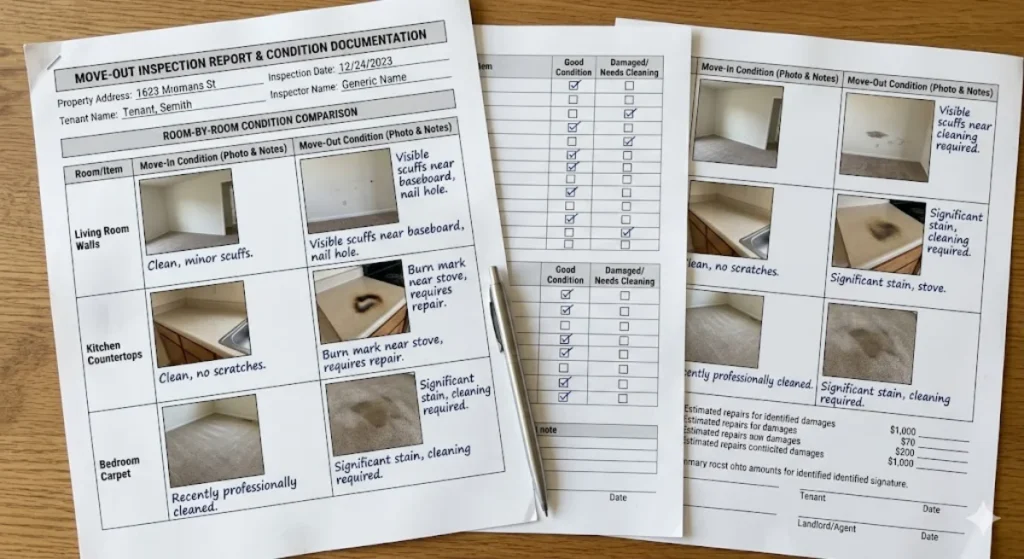
The move-out inspection is compared directly against your move-in report. Every item of damage beyond normal wear and tear should be photographed, described in writing, and noted with a repair cost estimate before your state’s security deposit accounting deadline.
Normal Wear and Tear vs. Tenant Damage
Normal wear and tear generally cannot be deducted from a security deposit. The following items typically support a legitimate deduction:
Examples of Tenant-Caused Damage
×
Holes in walls larger than a small nail hole
×
Unauthorized paint colors or paint applied over damaged surfaces
×
Pet damage, including scratched floors, torn screens, stained carpet, or chewed fixtures
×
Burns on countertops, floors, or carpet
×
Missing or damaged blinds
×
Broken tiles, cracked countertops, or shattered glass
×
Significant staining that standard cleaning will not remove
×
Broken door hardware, cabinet hardware, or towel bars ripped from walls
×
Unauthorized alterations, including removed fixtures, installed shelving, or modified plumbing
Move-Out Specific Items
Before You Leave the Property
Confirm keys, remotes, personal property, cleaning, and utilities before completing the final inspection.
All keys returned — document quantity and type
All personal property removed — document any items left behind
Garage door openers/remotes — returned
Mailbox keys — returned
Cleaning standard — professional-quality cleaning expected unless lease specifies otherwise
Utility transfers — confirm tenant-initiated disconnection or transfer
For move-out, use the same room-by-room structure as the move-in checklist above and compare each item against the documented baseline. Note condition changes with a clear photo, written description, and estimated repair or replacement cost.
What Property Managers Most Commonly Miss
Even experienced property managers have consistent blind spots. These are the items most frequently overlooked — and most frequently the subject of costly disputes:
What Property Managers Most Commonly Miss
Even experienced property managers have inspection blind spots. These are the items most likely to create avoidable damage, liability, or security deposit disputes.
1Under sinks. Slow plumbing leaks can go weeks undetected. Water-damaged cabinet floors and subfloor issues are expensive and avoidable with periodic checks.
2Dryer vents. Lint buildup in improperly maintained vents is a leading cause of residential fires and a landlord liability issue.
3Window screens. Small tears accumulate into significant replacement costs at move-out. Photograph screens at every move-in.
4HVAC filter condition. Tenant filter neglect damages systems over time. Document filter condition at every periodic inspection — not just replace it.
5Smoke and CO detector testing. Not just “present” — tested. Document the test result, not just the presence of the detector.
6Garage floors. Oil stains, chemical damage, and epoxy removal are legitimate deductions that get missed because inspectors skip floor photos at move-in.
7Exterior faucets and hose bibs. Freeze damage from tenant failure to disconnect hoses is common in cold climates and is generally a tenant responsibility if disclosed in the lease.
How to Reduce Inspection No-Shows
The most detailed rental inspection checklist is useless if you cannot get access. These practices consistently reduce no-shows:
How to Reduce Inspection No-Shows
Use these best practices to improve tenant cooperation, reduce missed inspection appointments, and keep your documentation process on schedule.
📄
Set expectations in the lease. A periodic inspection lease addendum establishes the tenant’s obligation to participate and what happens if they refuse. Download our free addendum here.
✉️
Give proper written notice. Most states require 24–48 hours. Know your state’s specific requirement and follow it every time. See our tenant inspection notice templates for ready-to-send letter, email, and text formats.
📅
Offer flexible scheduling. Evening and weekend availability dramatically reduces no-shows. Give tenants a window, not a single mandatory time.
What should a rental inspection checklist include?+
A rental inspection checklist should cover every area of the property: exterior, entry and common areas, living rooms, kitchen, bathrooms, all bedrooms, laundry area, and mechanical systems. Each item should be documented with a condition note and photo. Use the same checklist format for move-in, periodic, and move-out inspections so condition comparisons are defensible.
How often should a landlord inspect a rental property?+
Most property managers conduct periodic inspections every 3–6 months. Higher-risk properties or newer tenancies may warrant quarterly inspections. The right frequency depends on tenant history, property age, local regulations, and owner expectations. Always verify your state’s laws on inspection frequency.
How much notice does a landlord need to give before an inspection?+
Most states require 24–48 hours written notice before a non-emergency landlord entry. California requires 24 hours minimum. Some states allow shorter notice in emergencies. Notice should be given in writing and should state the date, time window, and purpose of the inspection. Using a standard tenant inspection notice template helps keep the process consistent.
Can a landlord do a property inspection while the tenant is at work?+
In most states, yes — provided proper written notice has been given, the entry is at a reasonable time, and the purpose is lawful. The tenant does not generally need to be present. However, some states have specific rules about entry without the tenant. Review your state’s landlord-tenant statutes before entering an occupied unit without the tenant.
What can a landlord deduct from a security deposit after a move-out inspection?+
Landlords can typically deduct for tenant-caused damage beyond normal wear and tear, unpaid rent, unreturned keys, and professional cleaning if the property was left unclean and the lease requires it. Deductions must be supported by documentation, specifically a move-out inspection report with timestamped photos compared against the move-in report. Without before-and-after documentation, deposit deductions are extremely difficult to defend.
What is the difference between a move-in and move-out inspection?+
The move-in inspection documents property condition before the tenant takes possession and serves as the baseline for the entire tenancy. The move-out inspection documents condition after the tenant vacates and is compared directly against the move-in report to identify damage beyond normal wear and tear. Both inspections should use the same checklist format and photo standards so the comparison is clear and legally defensible.
Can I use a tenant self-inspection instead of conducting my own?+
Tenant self-inspections are legally allowed in most jurisdictions for move-in walkthroughs but carry signif
Cookie Consent
We use cookies to improve your experience on our site. By using our site, you consent to cookies.
Contains custom information set by the web developer via the _setCustomVar method in Google Analytics. This cookie is updated every time new data is sent to the Google Analytics server.
2 years after last activity
__utmx
Used to determine whether a user is included in an A / B or Multivariate test.
18 months
_ga
ID used to identify users
2 years
_gali
Used by Google Analytics to determine which links on a page are being clicked
30 seconds
_ga_
ID used to identify users
2 years
_gid
ID used to identify users for 24 hours after last activity
24 hours
_gat
Used to monitor number of Google Analytics server requests when using Google Tag Manager
1 minute
_gac_
Contains information related to marketing campaigns of the user. These are shared with Google AdWords / Google Ads when the Google Ads and Google Analytics accounts are linked together.
90 days
__utma
ID used to identify users and sessions
2 years after last activity
__utmt
Used to monitor number of Google Analytics server requests
10 minutes
__utmb
Used to distinguish new sessions and visits. This cookie is set when the GA.js javascript library is loaded and there is no existing __utmb cookie. The cookie is updated every time data is sent to the Google Analytics server.
30 minutes after last activity
__utmc
Used only with old Urchin versions of Google Analytics and not with GA.js. Was used to distinguish between new sessions and visits at the end of a session.
End of session (browser)
__utmz
Contains information about the traffic source or campaign that directed user to the website. The cookie is set when the GA.js javascript is loaded and updated when data is sent to the Google Anaytics server