
A Guide to Inspection No-Shows: How to Solve a Costly Problem


Aaron Cooper
Founder & Chief Executive Officer, Resident Inspect
📍 Jacksonville, FL
Aaron Cooper is a seasoned property technology entrepreneur and inspection industry expert. As the Founder and CEO of Resident Inspect, he leads the development of intelligent inspection platforms that empower landlords, property managers, and investors to streamline digital inspections and ensure compliance.
🌐 residentinspect.com
✉️ aaron@residentinspect.com
Table of Contents
- What Are Inspection No-Shows?
- Why Inspection No-Shows Are a Serious Problem
- Why Traditional Inspections Lead to No-Shows
- The Live Video Inspection Solution
- Compliance Matters: Live Video vs. DIY Video
- Legal and Operational Benefits
- When Live Video Inspections Make the Most Sense
- Final Thoughts: Inspection No-Shows Are a Process Problem
- FAQs: Live Inspections & No-Show Prevention
Inspection no-shows are one of the most frustrating, and expensive, issues in property management. Missed appointments waste staff time, delay compliance documentation, frustrate owners, and create unnecessary tension with residents. Yet, despite how common inspection no-shows are, many portfolios still treat them as an unavoidable cost of doing business.
They are not.
Live video inspections, paired with proper compliance documentation, directly address the root causes of inspection no-shows while improving operational efficiency and legal defensibility.
This guide explains why inspection no-shows happen, why they create real risk, and how live video inspections solve the problem without sacrificing compliance.
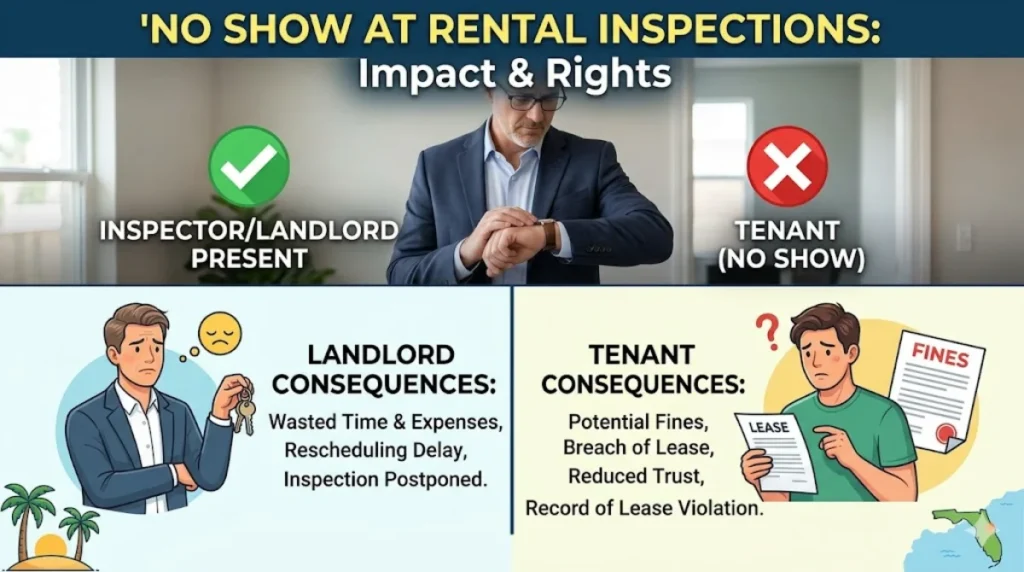
What Are Inspection No-Shows?
An inspection no-show occurs when a resident fails to appear or provide access at the scheduled inspection time. This applies to:
- Move-in inspections
- Move-out inspections
- Routine or periodic inspections
- Maintenance verification inspections
- Lease-required compliance inspections
Even when proper notice is given, no-shows remain common—especially in busy, high-turnover rental portfolios.
Why Inspection No-Shows Are a Serious Problem
Inspection no-shows are often dismissed as minor inconveniences. In reality, they create compounding operational and legal issues.
1. Lost Time and Labor Costs
Each missed inspection represents:
- Staff travel time
- Scheduling and rescheduling labor
- Opportunity cost for other inspections
Over time, this adds measurable expense to your operations.
2. Compliance Gaps
Many inspections are tied directly to:
- Habitability standards
- Lease requirements
- Local or state regulations
- Risk mitigation for liability claims
When inspections are delayed or skipped due to no-shows, compliance documentation becomes incomplete or outdated.
3. Increased Owner Risk
Owners expect inspections to:
- Protect asset condition
- Reduce disputes
- Support security deposit decisions
Missed inspections weaken documentation and expose owners to disputes, claims, and revenue loss.
4. Strained Resident Relationships
Repeated rescheduling creates frustration for residents and staff alike—especially when residents feel inspections are inconvenient or disruptive.
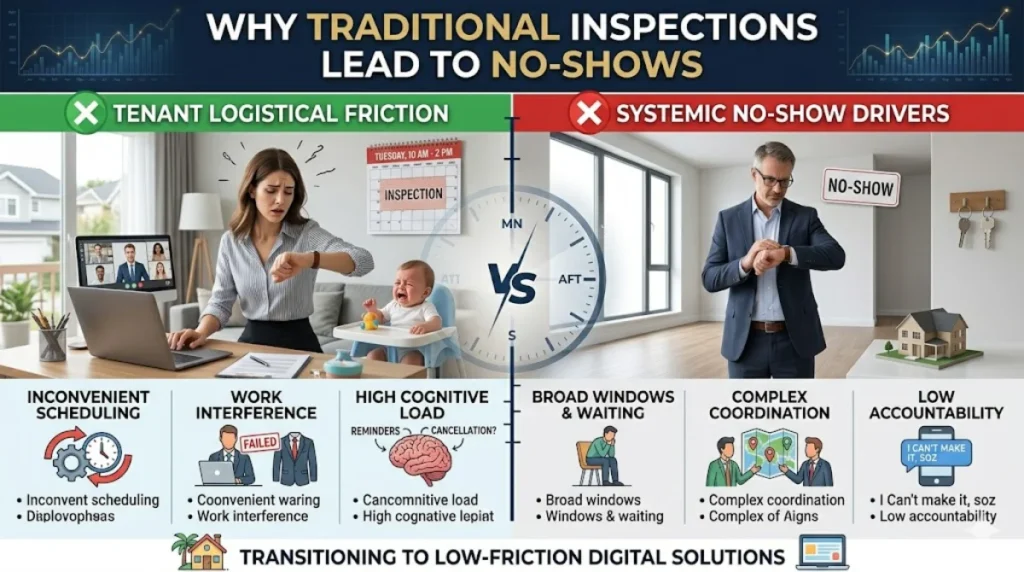
Why Traditional Inspections Lead to No-Shows
Inspection no-shows are not random. They are a predictable result of outdated processes.
Inflexible Scheduling
Residents are required to:
- Be physically present
- Coordinate time off work
- Wait for uncertain arrival windows
This creates friction and increases the likelihood of missed appointments.
Travel and Access Barriers
Traffic delays, gated access issues, and parking restrictions all increase failure points in traditional inspections.
Lack of Accountability
When inspections rely on physical presence alone, there is often:
- No clear record of who failed to attend
- No immediate fallback option
- No same-day resolution
The Live Video Inspection Solution to No-Shows
Live video inspections eliminate the single biggest cause of no-shows: physical presence requirements.
How Live Video Inspections Work
- The resident joins a scheduled live video call from their phone
- A trained inspector directs the walkthrough in real time
- Photos, videos, timestamps, and notes are captured instantly
- Documentation is compiled into a compliant inspection report
If a resident misses the scheduled time, the failure to attend is recorded—without wasted travel or staff time.
How Live Video Inspections Prevent No-Shows
1. Remote Access Removes Barriers
Residents can complete inspections:
- From anywhere
- Without taking time off work
- Without coordinating keys or access
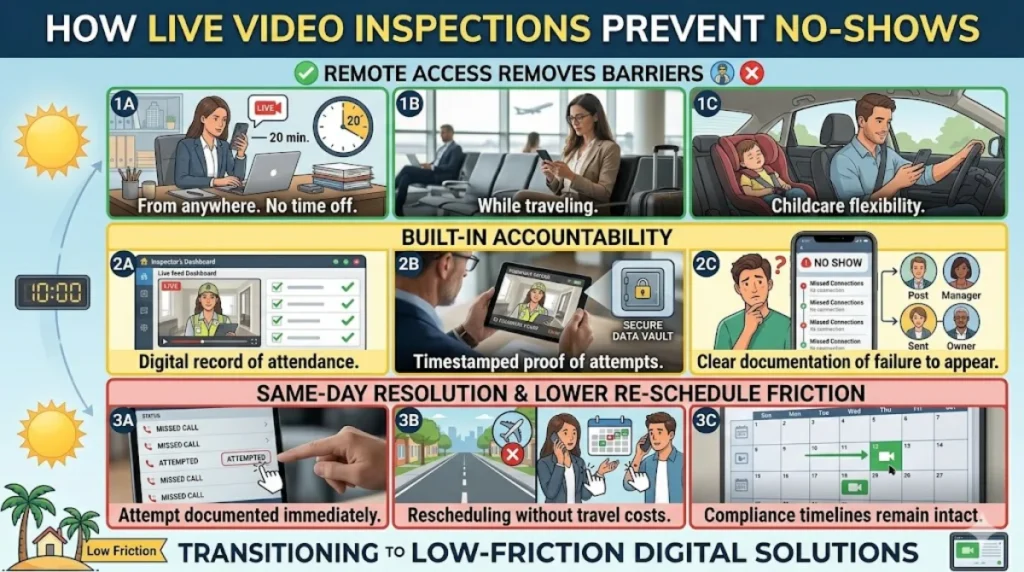
This drastically reduces missed appointments.
2. Built-In Accountability
Live video inspections create:
- A digital record of attendance
- Timestamped proof of inspection attempts
- Clear documentation if a resident fails to appear
This protects both the property manager and the owner.
3. Same-Day Resolution
If a resident is late or misses the call:
- The attempt is documented immediately
- Rescheduling can happen without additional travel costs
- Compliance timelines remain intact
Compliance Matters: Live Video vs. DIY Video
Not all video inspections are equal.
Why Live Video Is Critical for Compliance
Live video inspections provide:
- Real-time verification of property condition
- Directed walkthroughs (no skipped areas)
- Objective documentation created by a third party
- Time-stamped photos and video tied to the inspection event
Risks of Resident-Submitted Videos
Pre-recorded or DIY videos:
- Can omit damage
- Lack neutral oversight
- Are difficult to defend in disputes
- Often fail evidentiary standards
Live video ensures inspections remain defensible, consistent, and compliant.
See Virtual Inspections in Action
Get a personalized demo to discover how virtual inspections can save time, cut labor hours, and boost property management efficiency.
Get Your DemoPrefer to talk? Call our team.
Legal and Operational Benefits
Stronger Documentation
Live video inspections create inspection records that support:
- Security deposit determinations
- Damage claims
- Habitability compliance
- Owner reporting
Reduced Disputes
Clear, timestamped video documentation minimizes disagreements about:
- Property condition
- Responsibility for damage
- Inspection timing
Scalable Operations
Because inspectors are remote:
- More inspections can be completed per day
- Scheduling becomes easier
- Portfolios scale without proportional staffing increases
When Live Video Inspections Make the Most Sense
Live video inspections are particularly effective for:
- High-volume portfolios
- Long-distance or out-of-area properties
- Markets with frequent inspection no-shows
- Teams focused on operational efficiency
- Owners who prioritize documentation and risk reduction
Final Thoughts: Inspection No-Shows Are a Process Problem
Inspection no-shows are not a resident problem—they are a process problem.
Traditional inspection methods create friction, inefficiency, and compliance risk. Live video inspections eliminate those friction points while improving documentation quality, accountability, and operational control.
For modern property management teams, inspection no-shows should no longer be accepted as normal. With live video inspections and proper compliance workflows, they are largely preventable. Which will save you time and money!
FAQs: Live Inspections & No-Shows Prevention
What causes inspection no-shows in property management?
Inspection no-shows are typically caused by scheduling friction, required in-person attendance, work conflicts, unclear communication, and logistical barriers like travel delays or access issues. These are process-driven problems—not random behavior.
How much do inspection no-shows actually cost?
Inspection no-shows cost more than just time. They include staff labor, travel expenses, rescheduling coordination, delayed compliance documentation, and lost opportunity cost. Across a portfolio, these costs compound quickly and impact overall operational efficiency.
Do live video inspections eliminate no-shows completely?
While no system eliminates no-shows entirely, live video inspections drastically reduce them by removing the need for physical presence. Even if a resident fails to attend, the missed appointment is documented instantly—without wasted travel or labor.
Are live video inspections legally compliant?
Yes—when done correctly. Live video inspections provide real-time, timestamped documentation, guided walkthroughs, and third-party oversight. This creates a defensible record that supports compliance, disputes, and legal claims.
What is the difference between live video inspections and DIY inspections?
Live video inspections are conducted in real time with a trained inspector directing the process. DIY or pre-recorded inspections rely on the resident, which introduces risk—missed details, lack of verification, and weak documentation that may not hold up in disputes.
Can live video inspections replace in-person inspections?
In many cases, yes. Live video inspections can handle move-ins, move-outs, routine inspections, and compliance checks. Some situations—like major damage assessments or legal escalations—may still require in-person follow-up.
How do live video inspections improve documentation?
They generate structured reports with:
- Timestamped photos and video
- Inspector-led verification
- Consistent coverage of all required areas
- Immediate digital records
This level of documentation is significantly stronger than traditional or DIY methods.
Are residents more likely to comply with video inspections?
Yes. Video inspections are more convenient, flexible, and less disruptive. Residents can join from anywhere, which removes the biggest barriers that typically lead to missed appointments.
How do live inspections help reduce disputes?
Clear, time-stamped visual evidence minimizes ambiguity around property condition. This reduces disagreements over damages, security deposits, and responsibility—protecting both property managers and owners.