
How To Write a Tenant Inspection Notice

Aaron Cooper
Founder & Chief Executive Officer, Resident Inspect
📍 Jacksonville, FL
Aaron Cooper is a seasoned property technology entrepreneur and inspection industry expert. As the Founder and CEO of Resident Inspect, he leads the development of intelligent inspection platforms that empower landlords, property managers, and investors to streamline digital inspections and ensure compliance.
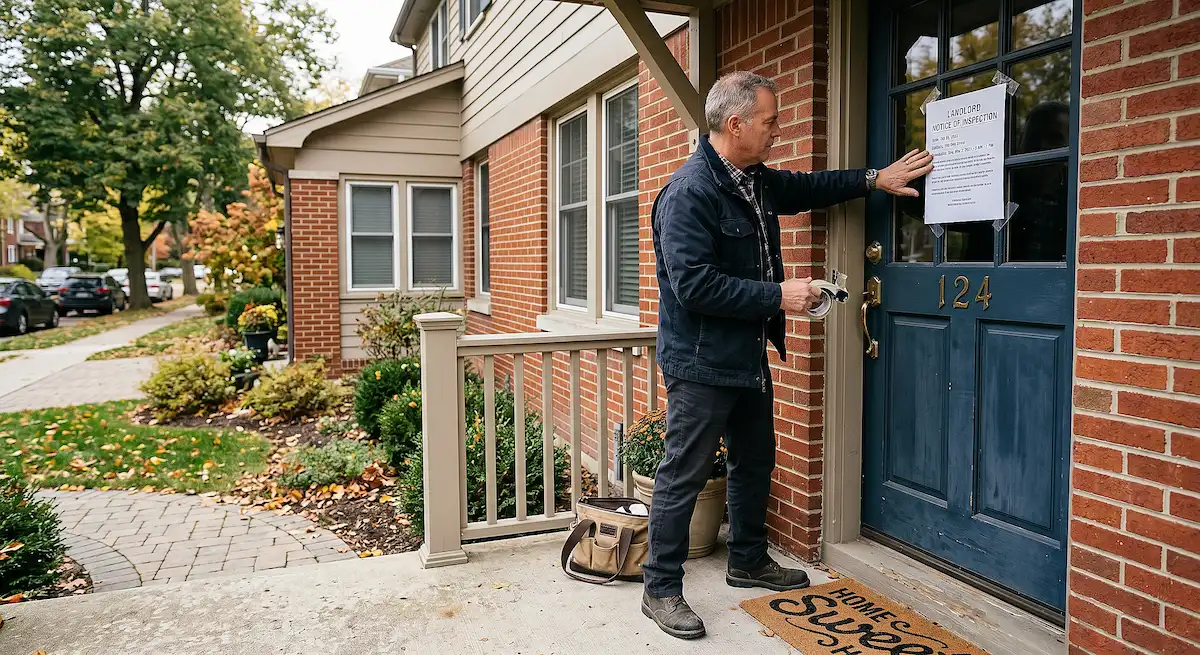
The tenant inspection notice is a small document with significant consequences when it goes wrong. A notice that meets the legal standard, explains the inspection clearly, and respects the tenant’s time is the foundation of a smooth inspection process. A notice that’s vague, improperly delivered, or legally deficient is a problem that starts before the inspector ever arrives.
The essentials: know your state’s minimum notice period, put it in writing, state the purpose and time window, deliver through a channel that creates a timestamp, and document the delivery. Use the templates in this post to standardize your notice process across your portfolio — then adapt them for virtual inspections as your program evolves.
Resident Inspect handles all tenant communication and scheduling for virtual periodic inspections — including inspection reminders that dramatically reduce no-shows. Your staff sends the formal notice; we handle everything else.
The inspection notice is the document most property managers think least about — and the one that causes the most problems when it goes wrong.
How to Write a Tenant Inspection Notice (Templates, Legal Requirements, and What Not to Do)
A notice that doesn’t meet your state’s minimum requirements invalidates your right to enter. A notice that’s vague, threatening, or poorly written sets an adversarial tone before the inspection even happens. A notice sent through the wrong channel — a text when your lease requires written notice, or an email when your state requires posted notice — can expose you to claims of unlawful entry even if everything else about the inspection was handled correctly.
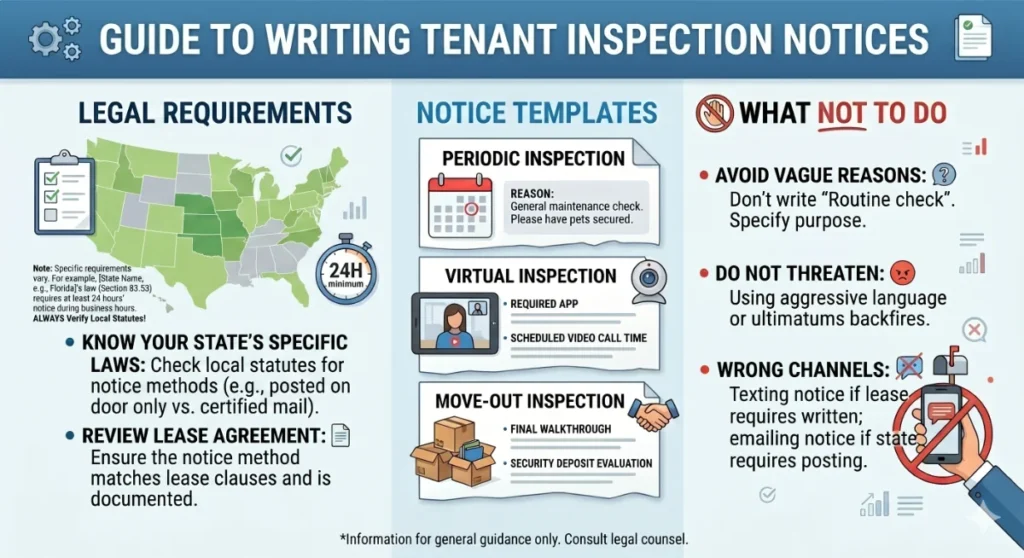
Getting the notice right is not complicated. But it requires knowing what your state requires, what your lease requires, and how to communicate the inspection in a way that gets tenant cooperation rather than resistance.
This guide covers the legal requirements for tenant inspection notices across all 50 states, the elements every notice must include, the channels that work and the ones that don’t, and ready-to-use templates for periodic inspections, virtual inspections, and move-out inspections.
Why the Inspection Notice Matters More Than You Think
The notice is not a formality. It is the legal foundation for your right to enter.
If a tenant later claims that you entered without proper notice — whether in a security deposit dispute, a habitability complaint, or a harassment allegation — the notice is your defense. A well-documented, properly delivered notice that meets your state’s requirements makes the tenant’s claim very difficult to sustain. An improper or missing notice hands them a significant legal advantage regardless of what you actually found during the inspection.
Beyond the legal dimension, the notice shapes the tenant’s experience of the inspection before it starts. A notice that reads like a threat or feels like surveillance produces a defensive, uncooperative tenant. A notice that’s professional, clear about what to expect, and respectful of the tenant’s time produces a cooperative one. The same information, delivered differently, generates different outcomes.
The inspection notice is your first communication about a specific inspection. It sets the tone for everything that follows.
Legal Requirements: What Your Notice Must Cover
Every legally valid inspection notice must satisfy the requirements of both your state’s landlord-tenant statutes and your lease agreement. Where the two differ, the more protective standard applies — meaning if your state requires 24 hours but your lease says 48, give 48.
The core legal elements every notice must address:
Timing of notice delivery. The notice must be delivered far enough in advance to meet your state’s minimum notice period. This is typically 24 hours in most states, 48 hours in others (Arizona, Delaware, Hawaii, Kentucky, Rhode Island, Vermont, Washington), and 12 hours in a small number of states (Florida, Wisconsin). The clock starts when the tenant receives the notice, not when you send it — which matters if you’re delivering by mail.
Method of delivery. Some states specify that the inspection notice must be in writing. Others allow oral notice. Even in states where oral notice is technically permissible, written notice is always the better practice because it creates a record. The safest delivery methods are email (with a timestamp), text message (with a timestamp), notice posted to the door (document with a photo), or delivery through your property management software’s messaging system.
Stated purpose of entry. The notice must state why you are entering. “Periodic inspection” or “routine property inspection” is sufficient in most states. California is the most specific in this regard — notices must state the approximate time, date, and purpose of entry.
Date and approximate time of entry. Specify the date and a time window. Showing up three hours outside the window stated in the notice can be challenged in some states.
Contact information. Include a name and contact method so the tenant can respond to reschedule if needed. This is not required by most state statutes, but it is good practice and reduces resistance.
Notice Requirements by State: A Quick Reference
Most states fall into one of four categories:
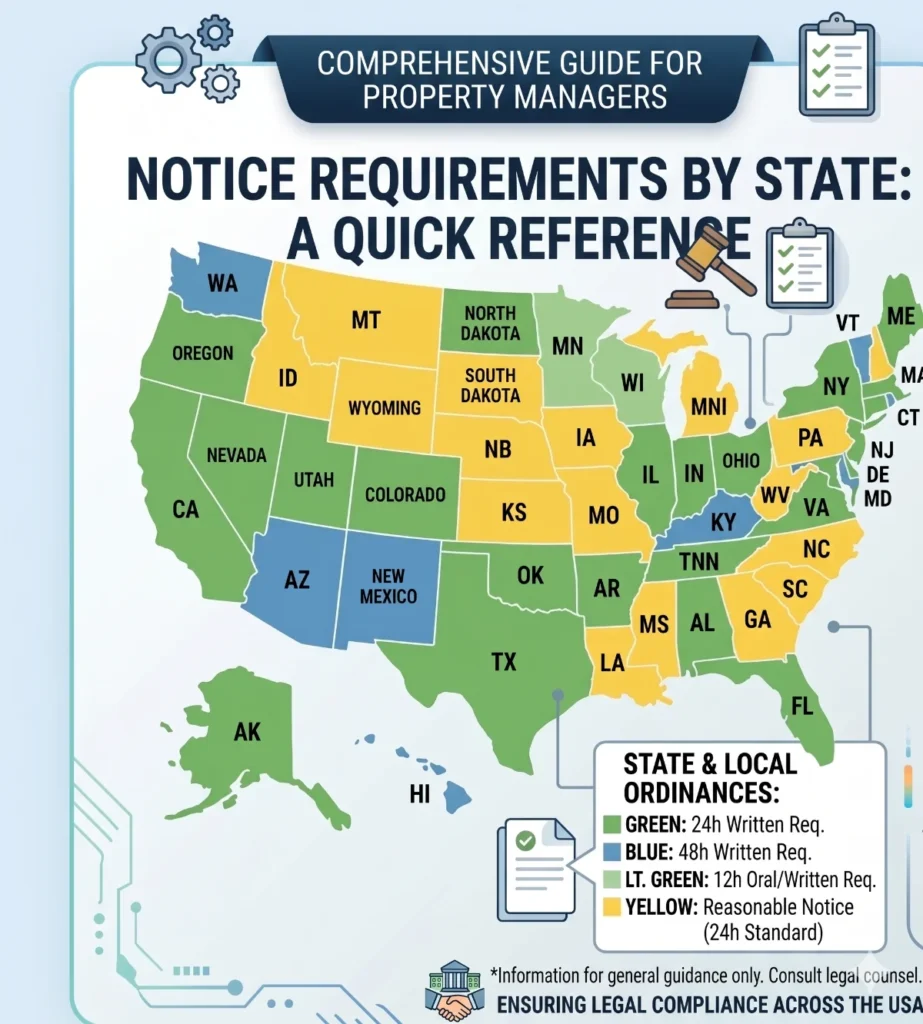
For Illinois, note that Chicago has specific local ordinances that may impose additional requirements beyond state law. New York City similarly layers local requirements on top of state law. Always verify the current statute in your state before relying on this summary.
The Elements of an Effective Inspection Notice
A notice that is legally sufficient is not automatically an effective one. An effective notice accomplishes three things: it meets the legal standard, it gives the tenant enough context to cooperate, and it makes it easy for the tenant to respond if rescheduling is needed.
Every inspection notice should include:
- 1Date the notice is being sent. This establishes the start of the notice period.
- 2The tenant’s name and property address. Personalizing the notice to the specific tenant and property reduces the bureaucratic feel and confirms the notice is intended for them.
- 3The date of the inspection. Clear and specific. Not “next week” or “sometime in the next few days.”
- 4The time window for the inspection. A 1 to 2 hour window is professional and practical. A 4 to 6 hour window is inconvenient for the tenant and unnecessary for the property manager.
- 5The purpose of the inspection. “Routine periodic inspection” or “semi-annual property inspection” is appropriate. You do not need to specify what you’re looking for.
- 6Who will be conducting the inspection. For in-person inspections, this is the name of the property manager or inspector. For virtual inspections conducted by a service like Resident Inspect, note that the inspection will be conducted by a trained inspector via live video call.
- 7Approximately how long the inspection will take. Setting this expectation reduces anxiety and shows respect for the tenant’s time. A periodic inspection takes 20 to 45 minutes. A move-in or move-out inspection may take longer.
- 8What the tenant needs to do. For in-person inspections, this might be providing access or confirming they’ll be home. For virtual inspections, this includes instructions for the video call. For all inspections, include a contact method for rescheduling.
- 9Your contact information. Name, phone, and email so the tenant can respond easily.
Ready-to-Use Inspection Notice Templates
The following templates can be used as-is or modified to match your company’s tone and lease language. Replace bracketed fields with the appropriate information.
| Template | Primary Purpose | Est. Duration | Key Tenant Action |
|---|---|---|---|
| 1. Standard Periodic | Routine maintenance check and general property condition verification. | 20–45 mins | Optional presence; ensure access is available for the inspector. |
| 2. Virtual Inspection | Remote walkthrough via live video call to assess condition without entry. | 20–30 mins | Mandatory presence; must have smartphone and Wi-Fi/data. |
| 3. Move-Out | Final assessment to determine security deposit deductions vs. move-in state. | 30–60 mins | Remove all property, clean to lease standards, and return all keys/remotes. |
| 4. Rescheduled | Updating a previously set inspection time due to conflicts or changes. | 20–45 mins | Confirm receipt of the new date/time or request another alternative. |
| 5. Second Notice | Follow-up for a failed/missed inspection; emphasizes lease compliance. | Varies | Immediate confirmation required to avoid potential re-inspection fees. |
To: [Tenant name(s)]
Property address: [Full address]
This notice is to inform you that a routine periodic inspection of your rental property is scheduled for:
Date: [Inspection date]
Time: [Start time] to [End time]
Inspector: [Name of inspector or property manager]
Estimated duration: 20–45 minutes
This is a standard inspection conducted as part of our regular property maintenance program. The purpose of the inspection is to verify the general condition of the property and identify any maintenance needs.
You are not required to be present during the inspection, provided access is available. If you would like to be present or need to reschedule, please contact us at least [24/48] hours before the scheduled time.
Contact: [Name] | [Phone] | [Email]
[Company name] | [Company address]
To: [Tenant name(s)]
Property address: [Full address]
This notice is to inform you that your upcoming periodic inspection will be conducted as a virtual inspection via live video call.
Scheduled date: [Inspection date]
Scheduled time: [Time window]
Estimated duration: 20–30 minutes
Inspector: A trained Resident Inspect inspector will connect with you via video call
How it works: At the scheduled time, you will receive a video call from your inspector. The inspector will guide you through the property room by room via your smartphone camera. You do not need to download any special application — the call is initiated through a standard video link.
What you will need:
- A smartphone with a working camera
- Cellular service or Wi-Fi connection at the property
- Access to all areas of the property including any storage areas, garage, and utility spaces
If you need to reschedule or have questions about the virtual inspection process, please contact us at least [24/48] hours before the scheduled time.
Contact: [Name] | [Phone] | [Email]
[Company name] | [Company address]
To: [Tenant name(s)]
Property address: [Full address]
As your tenancy at the above address is ending on [move-out date], this notice is to inform you that a move-out inspection has been scheduled for:
Date: [Inspection date]
Time: [Start time] to [End time]
Inspector: [Name]
Estimated duration: 30–60 minutes
The move-out inspection will document the condition of the property at the end of your tenancy and will be compared against the move-in inspection report on file. The inspection report will be used to determine whether any deductions from your security deposit are applicable under the terms of your lease.
You are welcome to be present during the move-out inspection. If you would like to attend, please confirm your availability by [date].
Please ensure that:
- All personal property has been removed from the premises before the inspection
- All keys, garage door openers, remotes, and mailbox keys are available for return
- The property has been cleaned to the standard required by your lease
If you have questions or need to adjust the inspection time, please contact us by [date].
Contact: [Name] | [Phone] | [Email]
[Company name] | [Company address]
To: [Tenant name(s)]
Property address: [Full address]
Following our previous communication regarding the inspection originally scheduled for [original date], your periodic inspection has been rescheduled for:
New date: [New inspection date]
Time: [Start time] to [End time]
Inspector: [Name]
Estimated duration: 20–45 minutes
Please confirm receipt of this notice by replying to this message or contacting us at the information below. If this time does not work for your schedule, please contact us at least [24/48] hours in advance so we can find an alternative.
Contact: [Name] | [Phone] | [Email]
[Company name] | [Company address]
To: [Tenant name(s)]
Property address: [Full address]
This notice follows our previous inspection notice dated [original notice date] for the inspection scheduled on [original inspection date], which was not completed.
As noted in your lease agreement and in accordance with [state] landlord-tenant law, periodic inspections are conducted every [frequency] as a standard part of your tenancy. Your cooperation in scheduling and completing these inspections is a condition of your lease.
A new inspection has been scheduled for:
Date: [New date]
Time: [Time window]
Inspector: [Name]
Please confirm by [date] that this time works for your schedule, or contact us to arrange an alternative. If we are unable to complete this inspection as scheduled, we may assess a re-inspection fee of $[amount] as provided in your lease agreement.
If you have any questions or concerns about the inspection process, we welcome the opportunity to address them.
Contact: [Name] | [Phone] | [Email]
[Company name] | [Company address]
Delivery Methods: What Works and What Creates Risk
How you deliver the notice matters as much as what it says. Different delivery methods create different evidentiary records — and some methods are legally required in certain states.
AppFolio, Propertyware, Buildium, etc. timestamps delivery, logs the message in the tenant’s file, and provides a documented communication trail that is hard to dispute.
Creates a timestamp and a searchable archive. To strengthen the record, request a read receipt or send a follow-up text to confirm the email was received.
Creates a timestamp and increasing common in property management communication. Screenshot and archive all text communications related to inspections.
Required by some states as an alternative method and visually confirmable. Document the posting with a timestamped photo on your phone.
Creates the strongest proof of delivery but is overkill for routine inspection notices. Reserve certified mail for second notices after refusals or formal lease violation notices.
Technically permissible in some states but creates no documentation and is impossible to prove if the tenant later disputes it. Almost never the right choice.
Common Mistakes That Invalidate Inspection Notices
These are the errors that most frequently turn a routine inspection into a legal problem:

-
Sending notice too late. If your state requires 24 hours and you send the notice at 4:00 p.m. for an inspection at 9:00 a.m. the next morning, the notice period was not met. Build in buffer — send notices at least a day ahead of the minimum requirement.
-
Sending notice without stating the purpose. Some states, particularly California, require the purpose to be stated. Even where not legally required, stating the purpose reduces tenant anxiety and resistance.
-
Scheduling outside reasonable hours. Most states require inspections to occur at “reasonable” times — typically 8:00 a.m. to 6:00 p.m. on weekdays. Scheduling an inspection outside these hours without tenant consent creates legal exposure.
-
Using an informal channel that leaves no record. A verbal notice to the tenant in passing, a message on a platform that doesn’t timestamp, or a note slipped under the door without documentation are all weak substitutes for a proper written notice.
-
Entering at a different time than stated in the notice. If your notice says 10:00 a.m. to noon and you arrive at 2:00 p.m., the notice is arguably invalid for the actual entry. Match your arrival to the time window stated.
-
Sending notice to the wrong contact. If the lease lists multiple tenants, the notice should go to all of them — or to the primary contact as defined in the lease. Sending notice only to one tenant when another had a concern about the inspection creates ambiguity.
-
Failing to document delivery. The notice is only useful as evidence if you can prove it was sent. Document every notice delivery in your property management system.
How Resident Inspect Handles Notice for You
One of the operational advantages of using a professional virtual inspection service is that the notice and communication process is handled by the service — not by your staff.
When a property is submitted for inspection through Resident Inspect, the service contacts the tenant directly to schedule the appointment. That contact — including the initial outreach, the scheduling confirmation, and the appointment reminders — constitutes notice of the upcoming inspection and creates a documented communication trail.
The Resident Inspect scheduling process doesn’t replace your obligation to provide a formal inspection notice under your lease and state law. But the scheduling and reminder process that Resident Inspect manages eliminates the follow-up friction and reduces no-shows dramatically, because tenants receive multiple touchpoints before the inspection rather than a single notice and silence.
For property managers running inspections at scale, the combination of a formal company notice and the inspection service’s scheduling communications creates a robust documentation trail for every inspection event.
Adapting Your Notice for Virtual Inspections
If you’re transitioning periodic inspections to a virtual format, the standard inspection notice needs adjustment in two specific areas.
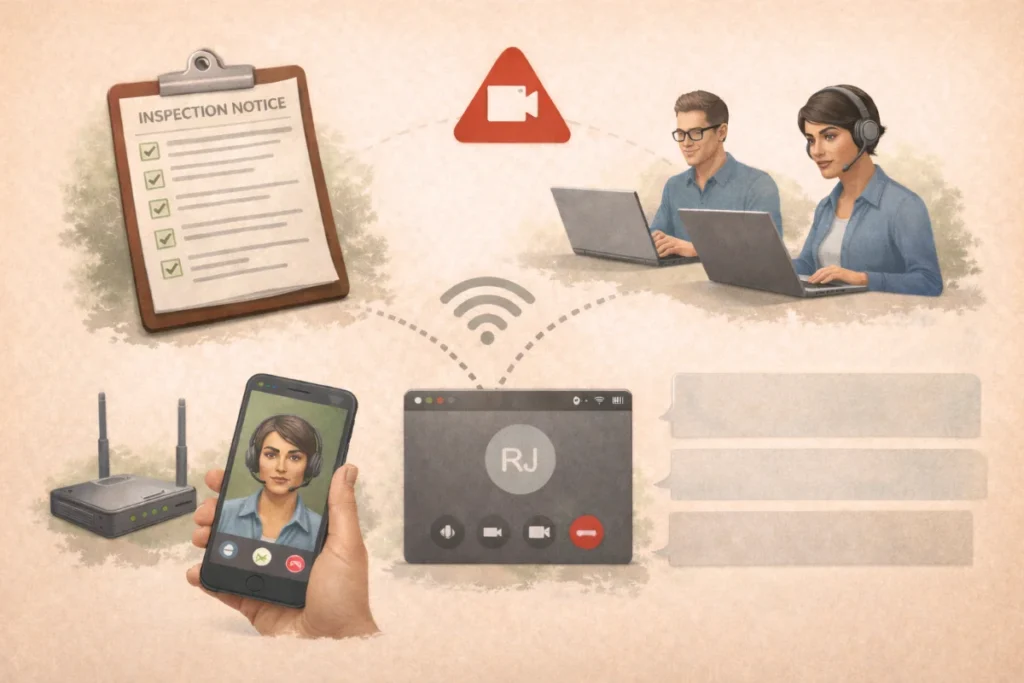
First, the notice must explain what a virtual inspection is. Many tenants have never participated in one. A notice that simply says “your inspection will be conducted virtually” without explaining what that means will generate confusion and questions — which delays the process and creates friction.
Template 2 above addresses this by describing the video call format, what the tenant needs, and what to expect. Including this context upfront dramatically reduces the questions and concerns that come back to your office before the inspection day.
Second, if your lease does not already address virtual inspections, include a brief reference to your right to conduct inspections “via in-person or remote video technology” in the notice. This doesn’t replace the lease addendum — it’s not legally binding to say it in a notice — but it normalizes the format and reduces the likelihood of the tenant objecting on the day of the inspection.
Frequently Asked Questions
In most states, yes — a text message satisfies the “written notice” requirement. Some states specify the method more precisely, so verify your state’s requirements. Even where text is permissible, follow up with email or a notice through your property management software to create a stronger documentation trail.
This is why delivery method and documentation matter. If you sent the notice via your property management software or email with a timestamp, you have evidence of delivery. If the tenant claims non-receipt, resend immediately via a different channel and document the resend. In a dispute, your documented delivery record is your defense — “I never got it” is very difficult to sustain when you have a read receipt, a timestamped email, and a follow-up text in the record.
The notice period starts when the tenant receives the notice — not when you send it. If you send an email at 11:00 p.m. and the tenant doesn’t read it until 8:00 a.m. the next day, the 24-hour clock arguably started at 8:00 a.m. To avoid any ambiguity, send notices during business hours and allow buffer beyond the minimum required period.
Yes. A single notice at the beginning of the tenancy saying “we will inspect periodically” does not satisfy the notice requirement for individual inspections. Each inspection event requires its own notice meeting the timing and content requirements of your state’s law.
You can send the move-in inspection notice as part of a move-in communication package, but it should be clearly identified as a separate notice. Include all the required elements — date, time, purpose — and make sure the timing meets your state’s minimum notice period from the scheduled inspection date.
Emergency entry does not require advance notice in any state. The standard is that a genuine emergency — fire, flooding, gas leak, structural danger — allows immediate entry. Document the emergency, what you found, and what actions you took. Notify the tenant as soon as reasonably possible after the emergency entry.