
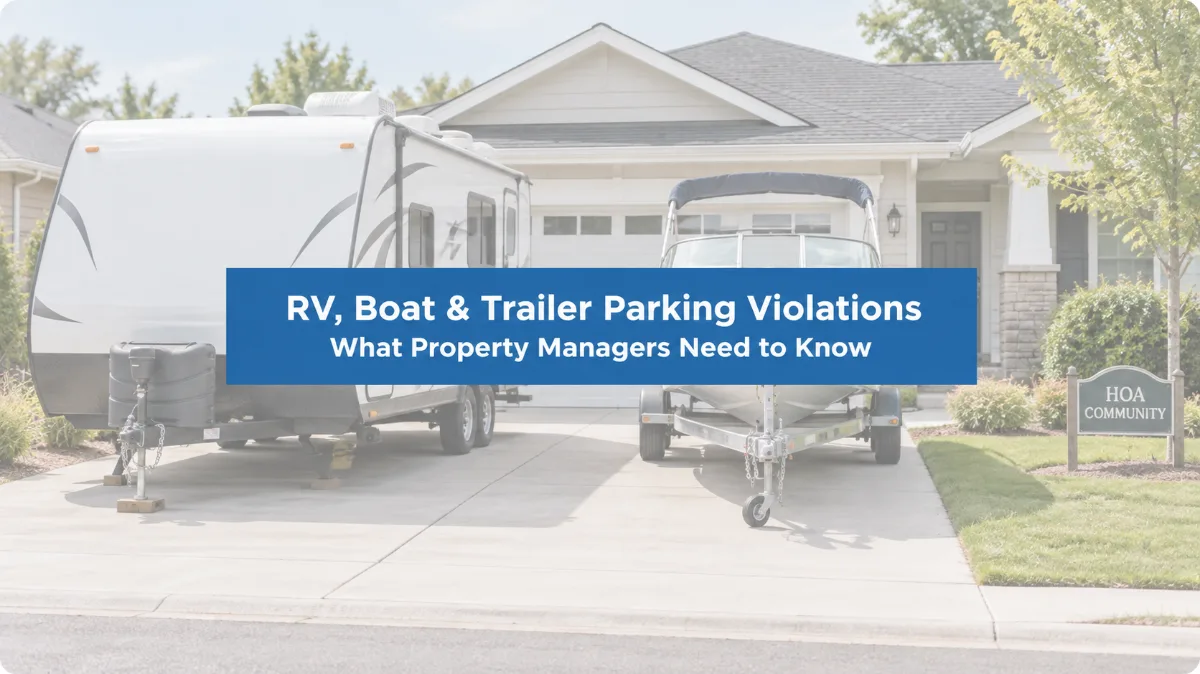
Property-use violations hiding in plain sight
Of all the lease violations a routine inspection can catch, unauthorized vehicle parking is one of the most visible and, paradoxically, one of the most often overlooked. A boat sitting in a driveway, an RV parked alongside a single-family rental, or a utility trailer that’s clearly become a permanent fixture rather than a weekend project doesn’t require any special detective work to spot. It’s right there. The issue is usually that nobody’s checking for it consistently, or nobody’s cross-referencing what they see against both the lease and, where applicable, the rules of the homeowners association the property sits inside.
This matters more than it might seem at first glance. An unaddressed RV or boat parking violation can escalate from a minor cosmetic issue into HOA fines against the property owner, a neighbor complaint that damages the property’s standing in the community, or in some jurisdictions, a municipal code violation that comes with its own fine schedule, all stemming from something a routine exterior inspection could have flagged and resolved months earlier.
RV, boat, and trailer parking disputes show up everywhere rental properties exist, from suburban HOA communities to urban single-family rental corridors. The specific rules differ sharply by city, county, and homeowners association, but the underlying inspection discipline, checking actual conditions against both lease terms and any applicable community rules, is the same everywhere.
The three layers of rules an inspector needs to think about
What makes this category tricky isn’t the inspection itself, it’s that there are often three separate, overlapping sets of rules at play, and an inspector who only checks one of them can miss a real violation.
- The lease. Most leases include a use-of-property or vehicle restriction clause covering what can be parked on the premises, how many vehicles are allowed, and sometimes specific language addressing recreational vehicles, boats, trailers, and commercial vehicles. This is the first and most direct layer to check.
- HOA covenants and rules (where applicable). If the rental sits in a homeowners association, planned unit development, or condo community, that association’s CC&Rs often impose their own, sometimes stricter, parking restrictions that apply to tenants exactly as they apply to owners. These rules can prohibit visible RV, boat, or trailer storage entirely, limit it to a specific loading window, or require it to be screened from street view. Critically, an HOA can fine the property owner for a tenant’s violation, which makes catching this early a direct financial interest for the owner, not just a tenant-relations issue. For broader operational context, reviewing Community Associations Institute resources on HOA rule enforcement can provide valuable insight into how these associations handle compliance.
- Municipal or county ordinances. Separate from both the lease and any HOA, local government ordinances frequently regulate how long an RV, trailer, or boat can sit on a public street, and sometimes regulate driveway parking as well, particularly where it affects sightlines, drainage, or neighborhood character. These rules exist independent of what the lease or HOA says and apply by virtue of where the property is located.
A single parked RV can potentially violate all three layers at once, or none of them, depending entirely on the specific property’s lease terms, HOA status, and local jurisdiction. That’s exactly why a national inspection checklist can’t assume a single blanket rule. What it can standardize is the discipline of checking all three layers every time, rather than assuming the lease is the only relevant document.
Because HOA covenants typically run with the property rather than the tenancy, an owner can be fined for a parking violation they never personally committed and may not even know about until the fine notice arrives. Catching the issue during a routine inspection, before it compounds into repeated fines, protects the owner’s bottom line directly.
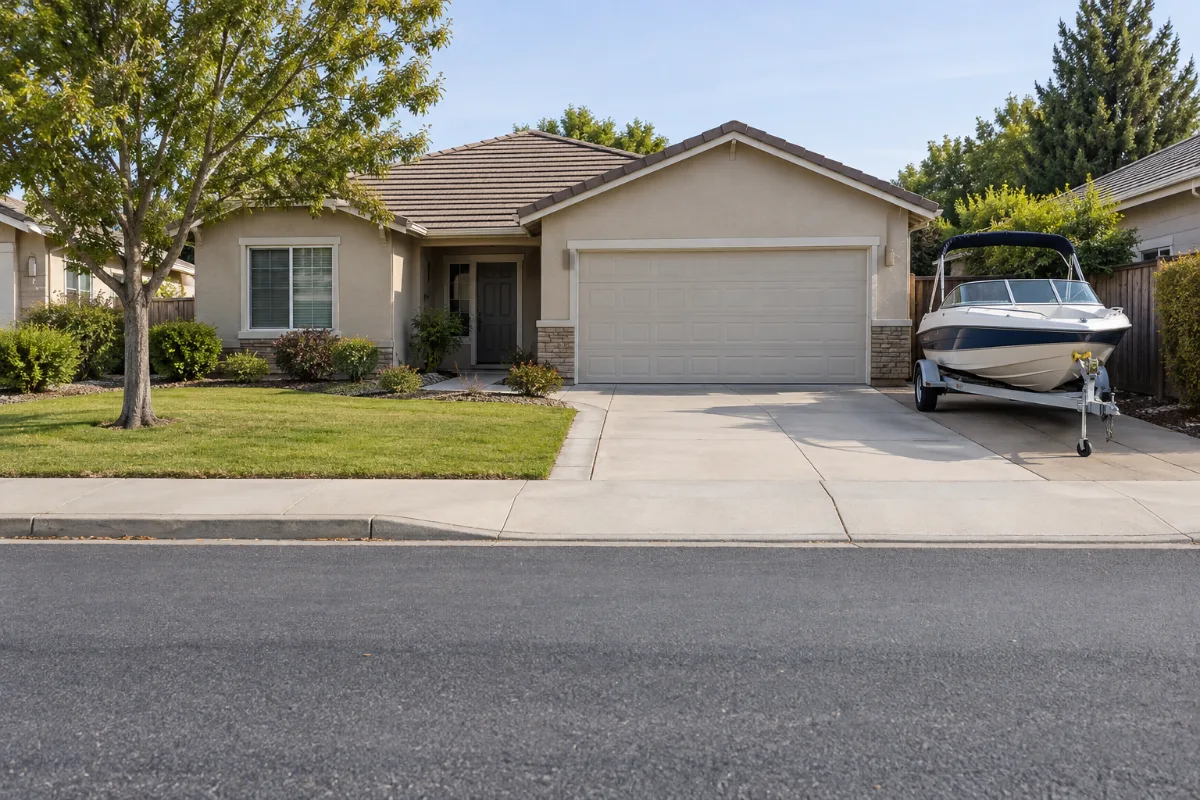
What a thorough exterior inspection should check
Folding parking compliance into a standard exterior walkthrough doesn’t require a separate visit. It requires a short, specific checklist added to the inspection that’s already happening:
- Vehicle type and size against lease terms. Does the lease define what counts as a prohibited vehicle (RV, camper, boat, trailer, commercial vehicle), and does anything currently on the property match that definition?
- Location on the property. Is the vehicle in the driveway, on a side yard, behind a fence, or visible from the street? Many rules turn specifically on visibility from the street or from neighboring properties.
- Apparent duration. Signs like flat or low tires, grass grown up around the wheels, accumulated leaves or debris on the vehicle’s surface, or a tenant’s own comment can all indicate a vehicle has been parked long-term rather than temporarily.
- HOA-specific signage or rules. If the property is in an HOA, does the inspector have (or know how to quickly check) the current parking-specific covenant language, since HOA rules are sometimes amended and an old copy may not reflect the current restriction?
- Street-facing versus private-property parking. Is the vehicle on the leased property itself, or parked on the public street in front of it? This distinction determines whether it’s a lease issue, a municipal ordinance issue, or both.
- Operational status. An RV or boat that appears inoperable, unregistered, or up on blocks often raises a separate concern (an abandoned or junk vehicle issue) that may trigger its own municipal code enforcement independent of the parking question.
Building this into a standardized exterior inspection checklist means every property in a portfolio gets checked the same way, which matters both for consistent enforcement and for defending against any claim that a tenant was singled out unfairly.
Enforcing it without creating new problems
Spotting the violation is the easy half. Handling it well is what prevents a straightforward parking issue from turning into a tenant relations problem or, worse, a selective-enforcement complaint. A sound process:
- Confirms the exact lease or HOA language before sending any notice, since rules and their wording can change between inspections.
- Sends written notice describing the specific violation and a reasonable cure period, consistent with what the lease or local landlord-tenant process requires. Leveraging National Apartment Association leasing and property rules resources can also help ensure your enforcement templates align with industry best practices.
- Applies the same standard to every tenant in similar circumstances. If one tenant’s RV has gone unaddressed for a year while another gets an immediate notice, that inconsistency can undermine enforcement if it’s ever challenged.
- Routes any accommodation request, such as a vehicle tied to a disability, through the proper reasonable accommodation review rather than a blanket parking policy.
- Follows up with a reinspection to confirm the vehicle has actually been moved or removed, rather than closing the file on a verbal promise.
Keeping scattered-site portfolios consistent
For property managers overseeing single-family rentals spread across multiple neighborhoods, cities, and HOAs, keeping track of which property has which parking rule, and inspecting consistently against it, is a real operational burden. Internal maintenance staff juggling work orders don’t always have the bandwidth to also track HOA covenant updates property by property. Working with a dedicated inspection partner for scattered-site portfolios keeps exterior condition and compliance checks on a reliable schedule across every property, regardless of how spread out the portfolio is.
Resident Inspect’s routine inspections include exterior and property-use checks that flag unauthorized vehicles, parking violations, and other lease compliance issues early, with documented, timestamped evidence your team can act on. Ask us about building this into your inspection program.
This article provides general information for property managers and is not legal advice. Lease enforcement standards, HOA covenant authority, and municipal parking ordinances vary significantly by state, county, city, and individual community. Always confirm current lease terms, HOA rules, and local ordinances, and consult qualified local legal counsel before enforcing a parking-related lease violation.
Frequently Asked Questions
Can a property manager really prohibit tenants from parking an RV or boat at a rental home?
In most cases, yes, as long as the restriction is written clearly into the lease and applied consistently. Lease terms governing what kinds of vehicles can be parked on the property, including size, type, and duration limits for RVs, boats, and trailers, are generally enforceable the same way other use-of-property restrictions are. The main exceptions are accessibility-related accommodations, such as a mobility vehicle or a medically necessary equipment trailer, which should go through the reasonable accommodation process rather than a blanket vehicle ban.
Do HOA rules about RV and boat parking apply even if the lease doesn’t mention them?
Generally yes, and this is one of the most common gaps property managers miss. When a rental property sits inside a homeowners association or planned community, the HOA’s covenants, conditions, and restrictions (CC&Rs) typically bind every resident of the property, tenant or owner, regardless of what the lease itself says. A lease that’s silent on RV parking doesn’t override an HOA rule prohibiting it, and the property owner can be fined by the HOA even if the violation was the tenant’s doing, which is exactly why inspections need to check against both the lease and the HOA rules, not just one or the other.
What’s the difference between a municipal parking ordinance and an HOA parking rule?
A municipal ordinance is a local government law, often regulating how long an RV, boat, or trailer can be parked on a public street or in a driveway visible from the street, and it applies regardless of whether the property is in an HOA. An HOA rule is a private contractual restriction that applies only within that specific community, and it can be stricter than, looser than, or different in focus from the municipal rule next door. A property can be subject to both at once, and an inspector flagging a parked RV should ideally note which type of rule may be implicated so the property manager can route the issue correctly.
How should an inspector document a potential parking violation?
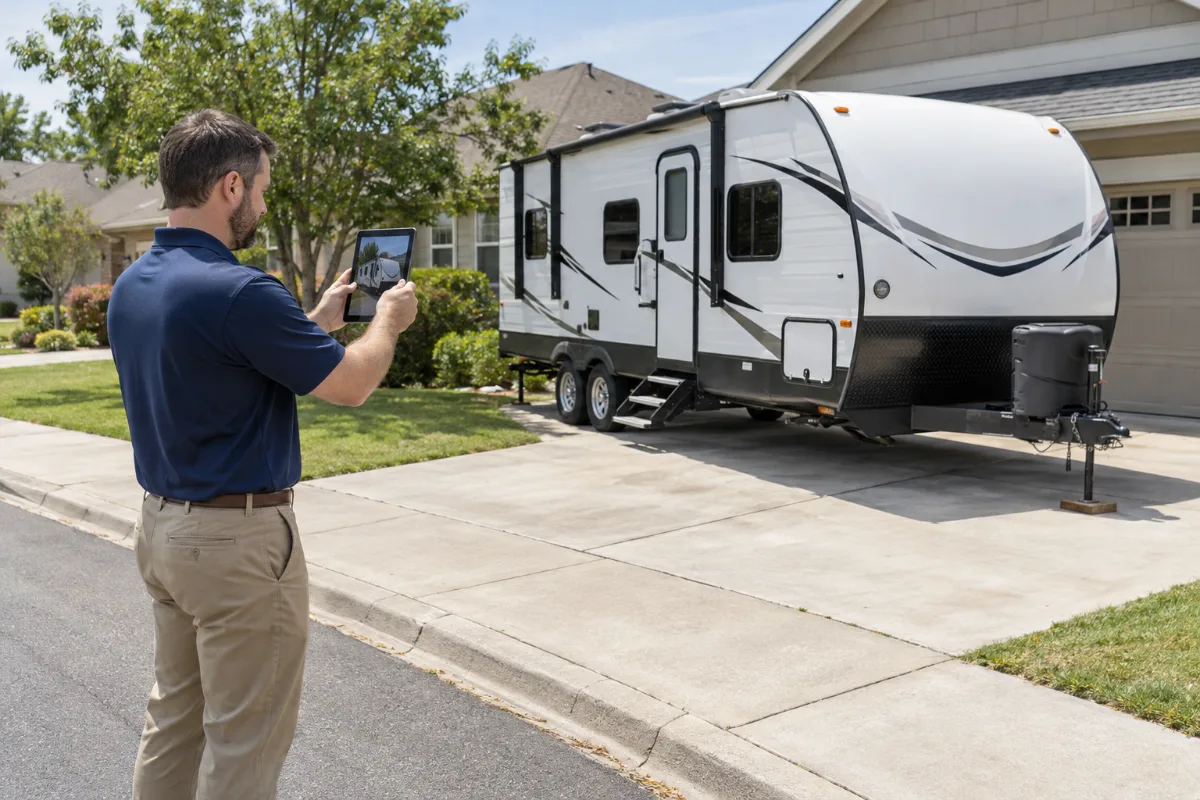
Take a dated, timestamped photo showing the vehicle’s position relative to the driveway, street, or any visible HOA signage, and note how long the vehicle appears to have been parked there if that information is available (tire marks, grass growth underneath, accumulated debris, or a tenant’s own statement). Comparing photos across two or more inspection visits, spaced at least a few weeks apart, is the strongest way to show a vehicle isn’t just parked temporarily for loading or a short visit.
What should a property manager do after an inspection flags an RV or boat parking issue?
Check the lease language and, if applicable, the current HOA rules before taking any enforcement action, since rules do change and a property manager’s reference copy may be outdated. Send the tenant a written notice describing the specific violation and the cure period required under the lease, keep a copy in the tenant file, and follow up with a reinspection to confirm compliance rather than assuming a verbal conversation resolved it.
Are driveway and street parking rules the same thing?
No, and conflating them is a common mistake. A lease or HOA rule restricting what can be parked in a driveway generally only governs that private space on the property itself. Parking on the public street in front of the home is typically governed by municipal ordinance, not the lease, which means a tenant’s RV parked at the curb may be a city code issue even when the lease’s driveway restriction technically doesn’t apply to it. Property managers should know which rule covers which location before flagging a violation to the tenant.



